I wish that I could tell you not to mind about the little things. I wish I could say the word, once spoken, could be taken back. I would love to assure you that you will always have one more chance to get things “right.” Yet, I can’t.
I can tell you many things if my only objective is to nourish false hope. If one doesn’t care whether truth puts on the mask of falsehood or whether wishful thinking replaces reality, one will listen to the worldly feel-good recipes of comforting assurance that it is “never too late.”
And while it eases the existentialistic pain of day-to-day existence to imagine things are possible that really aren’t, I’m here to let you know that living in a dream-world keeps you from being prepared for the inevitable tragedies that come with time.
As W. H. Auden wrote in his hauntingly prophetic poem, “Time will say nothing but I told you so.” For “it only knows the price we have to pay.”
The price is high – too high for mortals, for we wish to live in the land of Forever-Hopeful, where miracles that defy logic occur and where we convince ourselves that our lives will give us enough joy, love, peace, and happiness to outweigh all of the grief, cruelty, pain and suffering.
I could attempt to give you answers for this, but many would not listen. And who am I to solve the riddles of humanity or to explain why things happen as they do? I have beliefs, and they provide me with a much needed blanket of solace when everything about life stops making sense (if indeed it ever did) and when my own world appears to be shattering.
But who am I to think that what comforts me will comfort you? We are not here to be consoled. To be assured that things are better than they are only offers an escape from the reality of what is.
While believing, for example, in an all-knowing, loving and infinitely merciful Creator sounds good and while we may indeed find facts that back up such a belief, if we believe in such a Creator merely to bear the weight of our worldly burdens more easily, we set ourselves up for not merely disappointment, but, ultimately, disillusionment.
There are tragedies the like of which will remain forever mysteries to us as we walk this earth. We will lose the things and people we love most, if not tomorrow, then eventually. And there won’t be tidy explanations wrapped up in pretty paper like Christmas presents under a tree.
We will make mistakes that are irreversible and we will cause others and ourselves pain with little to no chance of reparation, not even to ourselves.
And through it all, there will be – if we are lucky (or, perhaps, unlucky) – those who assure us that everything will be okay, that all is not lost, and that we can begin anew each day, with hopes of still making our dreams come true.
However well-intentioned such advice is, it is far better not to wait until it is truly too late to distance ourselves from the chloroform of counterfeit hope.
J. R. Tolkien once wrote, “False hope is more dangerous than fears.”
How much better it is to begin to weigh each word we speak, to think through the choices we make with greater perspicacity, to make more time for that which is of eternal importance rather than expending our energies on the ephemerally urgent.
Although there is nothing wrong with clinging to a vision of a life better, grander, and more beautiful than the one you are living now and while having goals and dreams are an essential component of living with purpose, it is even more important to understand how fragile this life truly is and how quickly the things we take for granted now can be taken from us.
“Will time say nothing but I told you so?” Like Auden, if I could tell you, I would let you know.
Sascha 🦉
This page and a written material at A Pilgrim’s Odyssey is written by Sascha Norris. (C) Copyright 2023-2024 by Sascha Norris. All Rights Reserved
(Images were lensed by the preeminent New-York based photographer Rodney Smith (1947-2016)
Suicide is not a modern problem. Talking about it openly may be the result of the relaxed attitudes of contemporary culture, but people have been taking their own lives for centuries. In fact, the prophet Elijah expresses suicidal thoughts in the Bible. Yet, he is regarded as one of the most remarkable men who walked the earth. From raising a widow’s son from the dead to fighting against a tyrannical monarchy, Elijah’s accomplishments would put most of the comparatively small scale achievements of everyday mortals to shame.
But Elijah was all too human, just like all of us are. And, being so, he succumbed to the hopelessness and despair that envelops the weary spirit in the appropriately named dark nights of the soul.
In I Kings 19:4, it is written, of Elijah, “He sat down under the solitary broom tree and prayed that he might die. ‘I have had enough,’ he said, ‘Take my life, for I am no better than my ancestors who have already died.'”
God’s promise to be an “ever present help in times of trouble” is exemplified in Elijah’s story for while Elijah slept, God sent an angel to him to strengthen him with food and water.
However, there are times when the promises of God seem more like empty words than something solid that one can rely upon. For those who believe there is no God, there are no promises to fall back on- and, in a way, maybe that’s easier to bear than imagining one has been abandoned by one’s Creator.
Regardless of spiritual or religious beliefs, though, suicide is at its core a problem encompassing all of humanity. Much of the time, even now, it’s pushed aside or reframed in such a way that its seriousness is diluted. From “a coward’s way out” to “a permanent solution to a temporary problem,” trite and often hurtful sayings abound, none of which serve any real purpose other than adding guilt or shame to the already broken spirit of the person contemplating ending his or her life.
I know the feeling of hopelessness that leads to thinking of taking one’s life all too well because I have experienced it first-hand. Many others have who are either too proud or too ashamed to admit it, but I see no reason in writing at all unless one comes from a place of truth.
Those who, like me and millions of others, have thought of taking our own lives are in stellar company. The prophet Elijah is only the beginning of a long list of people, many of whom were famous, successful, and wealthy who took their own lives.
Iconic American author Ernest Hemingway took his own life with a single gunshot to the head, ending the earthly existence of a man who had won both the Pulitzer and Nobel prizes and whom many critics called “the greatest writer of the 20th Century.”
Although the choice he made puzzled and dismayed many, it was his way of creating his own ending to the book of his life. The majority of those who read his fiction know little of the struggles fought by Hemingway behind the scenes, but chapters filled with illness and great physical and emotional anguish and suffering finally took their toll on him.
Poets Anne Sexton and Sylvia Plath, both rare geniuses with distinctive voices that travel through the decades of time, made the choice to take their own lives. Although we can shrug off such incidents by ascribing them to mental illness or just being “nuts,” doing so only demonstrates our intellectual laziness and lack of empathy. Ridiculing, scoffing at, minimizing and dismissing serious subjects only makes one look shallow and callous. It doesn’t add to one’s stature in the eyes of others, however much it might do so in one’s own mind.
All earthly life is precious, and this includes all human life. Thus, when it is lost, it should be regarded as a tragedy, particularly if it could have been prevented.
And much of the time, it can be. We mortals minimize the damage we do to one another by failing to show understanding where it is needed. Those little acts of kindness, both random and not-so-random, that we all too often claim we don’t have time for, are often the very acts that could and would prevent a suicide.
Anne Sexton, another winner of the Pulitzer prize, suffered from depression and bipolar disorder. In the note she left behind, she wrote, in her signature scathing tone, “I could admit that I am only a coward crying me me me and not mention the little gnats, the moths, forced by circumstance, to **** on the electric bulb.” Sexton’s genius is undeniable from the writing she left behind, but with a single act, her brilliant literary voice was forever silenced.
Virginia Woolf, rare visionary and pioneer of the stream of consciousness, silenced her voice, as well. Yet her single act cannot negate her status as one of the most important of 20th Century modernist authors.
It’s ironic that so many whose work we regard with great acclaim and even reverence committed a final act that so many tend to regard with scorn, disdain, or a little of both.
We look towards Vincent Van Gogh’s paintings with awe, immersing ourselves in captivating starry nights and ebullient sunflowers, rarely remembering that the ingenious artist who gave us these masterpieces shot himself in the chest in a field and died two days later.
Our failure to properly address a problem that has robbed our world of so much beauty, creativity, and genius is egregious at best and inexcusable at worst.
We worship the creations of genius but fail to respect or care about the creators themselves. Is it any wonder then that the “average” man or woman who is suicidal receives so little empathy?
At this point, after centuries of being mocked, pushed under the carpet or excused via untenable justifications, suicide has reached what I would call a point of crisis. I became aware of this fully when I read an article about a 28-year-old woman who is ending her life by euthanasia this Spring. The woman, who lives in the Netherlands, is not scoffed at but rather aided in her choice by a government that has made it legal for someone to take decisive steps to end their lives, including being given the proper assistance to complete it.
While I am not trying to make this political, I do think that it shows something deeply wrong in a world if we can encourage suicide to the point of assisting in its completion yet can’t find effective ways to successfully dissuade someone from wanting to commit it in the first place.
Author William Styron, a man well acquainted with the kind of all-encompassing depression that leads to suicide once wrote, “The pain of depression is quite unimaginable to those who have not suffered it, and it kills in many instances because its anguish can no longer be borne.” He went on to say, “The prevention of many suicides will continue to be hindered until there is a general awareness of the nature of this pain.”
Styron, who ultimately succumbed to pneumonia and not suicide, is probably best known for his absorbing novels, yet it is his 84 page memoir, Darkness Visible, that elevates him from brilliant novelist to a translator of mental illness and mental health advocate for both his own time and future times. The clarity and openness with which Styron approached his own struggles with mental illness was something that writers before him who had hinted at such matters, including F. Scott Fitzgerald, had not done. Styron was willing to open himself up with the hope that, in doing so, he would help someone else who was suffering. He cared less about what the general public thought and more about who his words would reach.
Sadly, in spite of awe inspiring progressions in technology and multiple societal advances, we haven’t ever been able or willing to look at suicide as a problem that is less individual and more collective. We haven’t yet understood the link between one person’s pain and the pain of everyone around that person and how not adequately dealing with pain- not merely on an individual level but collectively- causes suicides and other tragedies.
And, yes, it helps to believe in a God that you can cry out to, but in leaving things strictly up to God or any Higher Power, we manage to absolve ourselves of our individual responsibility to take a problem like suicide seriously. By seeing it as “not our problem,” we are managing to make it more of a problem for ourselves and every mortal who walks this earth than it ever has been before. For now, in some countries and places, you can make an appointment to end your life as one might for a routine physical, and with the ostensible “normalization” of an act that is far from normal, I believe we have removed ourselves more from kinship with the human condition than ever before.
Suicide may have been as much of a problem in the old world but it’s only in a desensitized society where heartlessness has been crowned Queen and Apathy is her lady-in-waiting that one could make an appointment with a doctor to help one complete it.
Peace and blessings,
Sascha
This page and all written material at A Pilgrim’s Odyssey is written by Sascha Norris . (C) Copyright 2023-204 by Sascha Norris. All Rights Reserved.
(Photography is by Swedish Fine Art Photographer Gabriel Isak )
The dogwood tree bloomed outside my bedroom window this past week and as I admired the beauty of organic nature, I also reflected on the finite nature of all earthly things that live. From people, animals and insects to trees, plants, and flowers, the common component of all these things is that they will all die.
Perhaps, this is one of the most easily understood reasons that the religion of Christianity appeals to someone. That promise of a life after this one – and an eternal one, at that – brings much needed hope to dark days in an increasingly broken and uncertain world.
If you are anything like me, you enjoyed reading fairy tales as a child. The heroic figures of fanciful stories, embellished with the often hyperbolic descriptions that enhance their appeal not only attract us as children but they also speak to the still childlike parts of ourselves when we reach adulthood. If being a sophisticated “adult” is important to us, we may deny our interest in fairytales. For our society is much more likely to encourage us to be “productive” citizens than visionary dreamers.
As C. S. Lewis, a fervent proponent of fairy tale reading once said, “One day you will be old enough to start reading fairy tales again.” Interestingly, he also spoke of reading fairy tapes in secret at the age of ten, declaring he would have felt shame had his predilection for them been discovered.
Yet, there’s no denying that Christianity has a fairy tale aspect to it, for when one starts incorporating miracles, babies born of virgins, and people being raised from the dead into stories one would certainly classify the genre as science fiction, fantasy, or a little bit of both.
It’s an ironic twist of how things often play out, that a day like Easter, a holiday that is supposed to celebrate Jesus’s Resurrection from the Dead, has become enveloped in a candy coated wrapping of pastel hued Easter eggs that are the main attraction of Easter egg hunts, oversized bunnies (people dressed up in rabbit costumes), and baskets brimming over with candy and other sugary treats. If we are too “sophisticated” for fairy tales, should we not also be too “sophisticated” for such childish celebrations?
Now before you imagine that I was never a child myself or that, if I was, I never enjoyed the so-called “childish” things, I remember being four or five years old and fetching all the hidden Easter eggs at an elementary school across from where my grandparents lived. With the naive excitement of a child, I imagined that since I had found the eggs, they were all mine. Of course, I didn’t end up keeping them, lest you wonder how the story turned out.
I realize many of the Easter celebrations I have mentioned are “for children,” but the trouble is, they aren’t giving anyone, including the children, an accurate idea of what Easter is intended to signify.
If one does even a fair amount of research, the fact that the “Christian” Easter originated in paganism is easily discovered. The eggs are connected with fertility and the name itself, “Easter,” is inspired by the pagan goddess of fertility, known as “Ostara” or “Eoster.” As for the rabbit, it also has origins in paganism. Bede, an early medieval monk who has often been regarded as the father of English history, once noted that in eighth century England, the month of April was called Eosturmonath after the goddess Eoster. He went on to write that a pagan festival of Spring in the name of this goddess had become incorporated into Christianity’s celebration of Christ’s Resurrection.
These worldly, or, to be more specific, pagan rituals have been incorporated into a holiday named by and celebrated by professing Christians, and if and when the pagan aspects of the day are embraced (as they will be), remaining mindful of the genuine hope found in Christ’s Resurrection is even more important.
In all truth, we don’t need the stardust and tinsel of made up fairy tales to give us hope. People dressed up as giant Easter bunnies and eggs dyed nearly every shade under the rainbow are temporal attractions, offering a joy that is both short lived and lacking in genuine fulfillment.
We can say what we like about Christianity being a fairy tale and can mock those who adhere to its teachings, but unless one has not ever believed in anything that wasn’t visible or that didn’t obey the “rules” of logic, discounting Christianity based simply on the fact it has supernatural elements isn’t a solid argument.
Although Sigmund Freud once called Christianity a “fairy tale ” and his followers replaced this with “folk tale,” those who open their minds enough to do some research know that Jesus was a real person and that the accounts of him in the New Testament were eyewitness accounts written before and after his death.
Easter, if one believes the research on its origins, is pagan and yet the same things being celebrated by pagans in this Springtime holiday- hope, life rebirth and renewal are also what Jesus offers those who follow Him.
So, eggs, Easter baskets, and bunny rabbit impersonators aside, we can all agree on the sentiments behind the holiday, even if those sentiments are evoked by different things. And, perhaps, those who have not yet gotten to know Jesus or taken the time to contemplate whether there is indeed truth in his identity as the Son of God as well as hope in the promise He offers of eternal life, will do so.
As C.S. Lewis said, “Christianity is both a myth and a fact. It’s unique. It’s the true myth.”
And just as goodness triumphs over wickedness in the fairy tales we love most, and just as redemption is offered to villians who seem beyond hope, so, too, Jesus offers us both redemption and promises us the ultimate triumph of good over evil, if not in this life, then in the next.
Peace & Blessings,
Sascha 🕊
March 31. 2024.
This page and all written material at A Pilgrim’s Odyssey is written by Sascha Norris. (C) Copyright 2023-2024 by Sascha Norris. All Rights Reserved.
(Images are: Cover Art- Easter Lamb of God and Cross by Sara Tee. Other images by artists John Pototschnik and Yongsung Kim)
I am guessing most people will agree that when you believe in something sincerely and with your whole heart, you don’t feel shame in believing it. Much of the time, your sense of security in whatever this belief happens to be is grounded in the fact that you think it is “right.”
Now, before you began throwing philosophical perspectives in my direction, claiming that both “right” and “wrong” are cultural “constructs” or similar ideas, I shall assure you that I am speaking about people in general, most of whom have little interest in perusing books by philosophers like Plato, Aristotle, or Friedrich Nietzsche with their morning cup of java.
Let’s think, for a moment, of a child who believes in Santa Claus or the Easter Bunny. Have you ever come across one who seemed ashamed to share his or her belief with you?
If you’ve encountered children anything like the ones I have, they are bubbling over with excitement over the thoughts of Santa coming to town or the Easter bunny bringing goodies in a basket.
Their enthusiasm for “beings” that are not real and, rather, the fanciful concoctions of a combination of myths, fairy-tales, and other stories is so genuine that it is often contagious.
Yet, adults, specifically those who claim to be Christians, seem to demonstrate the opposite behavior when it comes to the Savior they say they believe in. Rather than wanting to tell everybody about Him and what He’s done for them in their own lives, they hesitate to even speak about their faith and, much of the time, one wouldn’t be able to tell one bit of difference between them and someone with no religion at all.
Perhaps, there is something I’m overlooking about this, and maybe there is some very sensible explanation. Could not talking about one’s faith be part of the new trendy term called “adulting?”
And, if so, might this be why God has placed such an importance in those who come to Him having childlike faith?
Please do understand that I am no expert on the subject of faith nor do I claim to take advantage of every opportunity that comes my way to share my faith.
However, I am trying to understand this seeming contradiction between being a Christian and feeling that one has made the best possible choice in this respect and yet simultaneously not wanting to tell other people about it. Surely, there is some key element in this equation that I am missing.
Now, as for me, because it took decades for me to finally acknowledge my own weakness and insufficiency to the point that I accepted Jesus Christ as my Savior, I am eager to share my journey. For, you see, in doing so, I’m hoping I can spare others some of the pain, suffering, and utter despair I have endured from not making this choice sooner.
You can think I’m being dramatic if you like and you can also imagine I’m saying whatever needs to be said in order to convert others to my way of thinking, but that’s simply not so.
It isn’t my job to convert you, and, even if I wanted to, accepting Jesus as your Savior is something an individual must do on his or her own – or not. I won’t go into a detailed discussion about how we all have Free Will, but we have been given the freedom to choose. “By whom?, ” you may ask. Well, if you don’t believe in any sort of Higher Power, I’m not sure what conclusion you can come up with that’s the least bit logical. If you do believe in a God of any kind, then you can credit Him (or Her if you wish to go that route) with giving you Free Will.
However, let me get back to the main subject I am addressing rather than getting diverted by the Free Will debate, which will probably go on until time in this earth ends.
Might it be that God, when speaking of one needing to have the faith of little children, was anticipating how difficult it would be for those sober oh-so-grown-up professing Christians to eagerly share their faith with others? After all, it is Jesus who calls the children to Him in the Gospel of Luke (18:16-17), saying, “Let the little children come to me, and do not hinder them, for the kingdom of God belongs to such as these. Truly, I tell you, anyone who will not receive the kingdom of God like a little child will never enter it.”
As God is omniscient, I am guessing He knew precisely the type of meek attitude and childlike spirit that would be required for a Christian to embrace Him and their faith with assurance and confidence rather than with silence and shame.
That being said, unless those of us who say we love and believe in Him are willing and able to channel that little girl or little boy in ourselves and share what He’s done for us with childlike awe, we will forever be like lamps that choose to remain unlit.
Peace & Blessings,
Sascha 🕊
This page and all written material at A Pilgrim’s Odyssey is written by Sascha Norris. (C) Copyright 2023-2024 by Sascha Norris. All Rights Reserved.
(Painting is “Secret Promise” by Japanese artist Shiori Matsumoto)
What can one say about a little owl who made an unforgettable impact on not only the nation but the whole world?
It’s all too easy to say, “He’s just an owl,” imagining that in being dismissive, somehow the difference that Flaco made in the lives of millions of people might be diminished.
But reducing the significance of something in our own minds never alters the breadth of its meaning, and Flaco’s year of freedom and how it affected the world is no exception.
In case you think that appreciation for owls is a new phenomenon, it should be noted that owls have been regarded with admiration and even a certain amount of awe for centuries. In ancient mythology, the goddess of wisdom, Athena, was said to have chosen the owl as her companion, and owls have continued to be associated with wisdom, knowledge, intelligence, perspicacity, vigilance, and enlightenment throughout history. In more recent times, such well known public figures as social reformer and modern nursing founder Florence Nightingale and painter and sculptor Pablo Picasso have kept owls as pets, with Florence choosing to bestow the name Athena on her pet screech owl, whom she rescued from abusive bullies on a trip to Italy.
And in a way, that is what fearless Flaco became for all of us – a pet for the millions of people who loved him. He represented the underbird who nobody thinks will be able to survive yet who manages to thrive like a feathered samurai.
From perching on water towers to visiting the fire escapes of surprised NYC residents and peering in their windows, Flaco was as much debonair bandit as he was regal prince. One might find him just as readily devouring rat sushi as posing for the hootarazzi like the owlcon that he was.
Unsurprisingly, Flaco’s owlventures became the subject du jour in news publications around the world and as he quickly became the world’s most photographed owl, we who followed his escapades awaited each new episode of The Flaco Chronicles with as much anticipation as that of a child eager to open presents on Christmas morning.
There are some who feel this worldwide fixation on a single owl is not only peculiar but downright ridiculous. In trying to strengthen their case, they bring up news they feel is of much graver import – such as casualties in Gaza and the war in the Ukraine. Sadly, in pointing towards these seemingly more “important” issues and attempting to diminish the significance of Flaco and his life by doing so, these people – however well intentioned they may be- are only making it clear why we became so captivated by and attached to Flaco in the first place.
Although I don’t want to make this about me when it’s mostly about Flaco, what I am about to share does relate to Flaco. And because it may strike a chord with someone else, I feel I should share it.
Like Flaco, I was somewhat of a captive for a large portion of my life. The decisions that should have been made by me, both big and small, were made for me by those parental and authority figures who had power over me and my life.
Thus, seeing Flaco start afresh, breaking free from the shackles of the zoo that had so thoroughly suppressed his free spirited self, ignited in me a spark of hope, making me feel that I could do the same. Of course, unlike a person, whose attempts to achieve freedom might be hindered by all kinds of complications such as intimidation, threats, and similar psychologically manipulative strategies, Flaco was able to liberate himself rather effortlessly. And aside from a few unsuccessful attempts to recapture him, Flaco soared high on the wings of freedom, with the enthusiastic support of thousands upon thousands of fans providing the wind beneath his wings.
As those who are continuing to follow the rise and fall of Flaco know all too well, there are two opposing parties who, although sharing a mutual love of Flaco, disagree (and sometimes vehemently) as to whether returning Flaco to the zoo that he escaped from would have been better than allowing him to remain free.
I have always felt that keeping an open mind means trying to understand different perspectives, whether one agrees with them or not. For much of what we learn in life is taught to us through our relationships with others. Even those who wish to remain solitary are forced to coexist with other sentient beings.
That being said, although I can see why those who believe Flaco’s life was put at dire risk by him being thrust into an unknown city filled with a plethora of dangers feel as they do, the lasting impact Flaco has made on a world yearning for a beacon of hope, freedom and resilience such as he represented, would never have occurred if he has stayed in or been returned to a cage. So, although I am not saying the vandal who presumably inadvertently enabled his escape should not bear some repercussions for his or her actions, what I am saying is that without that event taking place, Flaco’s life would have been one of the average captive owl, forgotten in both life and death, with no lasting impact on anyone aside from his zookeepers and the visitors who strolled past his cage.
Lest you think I am saying that Flaco’s early death was a sacrifice worth making because of the difference he made on the world through his year of freedom, that is not my intention nor is it what I believe.
Yet, as is often the case in life, remarkable achievements generally come at a cost. The world is difficult enough when one has everything going in one’s favor. For Flaco, the odds were stacked against his wings, even as he soared to astounding heights, taking us with him on each new peak of owlventure.
I think, if you and I and anyone who happens to be reading this are honest with ourselves, we will admit that, in our hearts, we don’t think owls were ever intended to be kept in cages. Owls are wild, free beings, and even when they have been kept as pets, the incidents of them being kept in that capacity have been few and far between.
And if owls were not supposed to be wild and free, we wouldn’t have been so entranced by Flaco’s journey. We were rooting for him because we knew that he was finally getting a chance to do what he had been created to do from the beginning. He was fulfilling his calling as a bird in the wild, and, even though New York was far from the ideal place for him to embrace his mission, it happened to be where he ended up, and relocating him appeared to be a problematic venture. With each new rat Flaco procured for his dinner, we became more and more convinced that his innate hunting skills were taking over and that he was getting accustomed to depending on himself.
For many of us, Flaco’s success when it came to defying the odds made us feel better equipped to handle obstacles in our own lives. His bravery gave us the hope we needed to face uncertain tomorrows of our own and his tenacity made us feel that we might be stronger than we often give ourselves credit for.
But more than anything else, Flaco showed us that in spite of our differences as a society, when we find a common love to share, we can come together in a way that is truly miraculous. And through this coming together, we can forge connections that would never have come about any other way.
In life, we tend to find the meaning in an event or set of circumstances that we are ready to accept. If we are not prepared to grasp or benefit from a certain lesson or message, then, no matter how ostensibly the universe tries to get us to hear it, our ears will remain deaf.
Those who choose to see Flaco’s life as needlessly cut short or who decide to see it as a tragedy, will never understand what Flaco intended for his life to mean. He truly wanted to be part of the great, big world outside his cage and beyond the zoo.
Perhaps, Flaco knew that he could give something to the world that we needed. Maybe he knew that we were in want of a reminder that life is not about how many breaths you take or how many days you live but rather about how many breathtaking moments you experience and how many lives you touch along the way.
No, nothing can bring Flaco back to this earth, but if we live our lives differently because of him, if we give more grace when it is needed, both to ourselves and others, if we learn to face our fears more readily, rather than ignoring them or running away from them, and, most importantly of all, if we develop the capacity to look beyond gender, race, spiritual and political beliefs and see ourselves united through our common humanity – as we have been through our love of Flaco – then Flaco’s life will have never been in vain.
Peace & Blessings,
Sascha 🦉
This page and all written material at A Pilgrim’s Odyssey is written by Sascha Norris. (C) Copyright 2023-2024 by Sascha Norris. All Rights Reserved.
Photos of Flaco are (cover) by David Barrett (i.e., Manhattan Bird Alert) and (article collage) by Mark, known as Above_96th on Twitter/X and Instagram.
Thank you to those photographers, including David and Mark, who captured Flaco’s unparalleled beauty so magnificently in photos and videos.
We are all designed with a need to both give and receive love. This need is intertwined into the innermost part of our being. You might say that it is part of our DNA. Try as we might to convince ourselves that we don’t require love in our lives to be content or happy, the truth is that the need to be loved is part of being human. And the need to show love to others is present in all but the most narcissistic of mortals. .
The difficulty in both of these needs is that no earthly love can or will ever fulfill us. For the inadequacy that is within a mortal’s ability to love is bound up in his or her very essence.
We are created beings, formed by an all-knowing Creator whose nature is the epitome of love, regardless of how it might appear otherwise from the broken world we all live in. And our Creator’s perfect love is far beyond the scope of human comprehension. In fact, that which we humans call “love” is most likely so far removed from His love for us, that one might wonder if it even resembles it.
For humans, love, no matter what we say or even think of it as, is all too often a series of deposits and withdrawals, a pattern of giving and taking, ,in which careful mental notes are kept of who did what, gave what, and said what. Egos are bruised, feelings hurt, and hearts broken, all in the name of what we call “love.”
If God’s love for humanity were akin to our “love” for our fellow mortals, we would already have been wiped off the face of the earth. Love was never intended to be a transaction or a power play of sorts. And the fact that it so often is makes it not the least bit surprising that millions of people around the world are living bereft of genuine love.
Every Valentine’s Day, the stores cater to the romantic ideal, overloading our conscious and subconscious minds with the false idea that boxes of chocolates, flowers, and similar gifts are a reflection of or a substitute for love. None of these things are lasting comfort to the soul aching for true love and acceptance, the soul seeking a mutual connection with someone who understands them, or, at least, makes the effort to.
I hope my readers will not imagine that I see myself as any sort of expert on the subject of love, for all I really know is what it should be. I haven’t the faintest idea of how to perfectly love anyone, and I don’t think any mortal does. Oh, some of us imagine ourselves to be experts on the subject, but the world we live in shows what a poor comprehension we, as a society, have of love. None of us are experts – we’re just people who think we know a lot about things that we have very little, if any, knowledge about. Mostly, what we have are “answers” for questions that we never even understood to begin with.
French anthropologist and ethnologist Claude Levi-Strauss once said, “The wise man doesn’t give the right answers, he poses the right questions.” The problem with most of us is that we don’t know what the right questions are, yet we demand answers anyway.
And while this sort of behavior might work reasonably well in something like math or science, since not having the right questions would eventually become obvious, in the realm of love, things aren’t so clear-cut. For we humans aren’t able to be defined on pieces of paper or reduced to algorithms.
We were created as multi-faceted beings with emotional needs so subject to change and circumstantial variables that they might well be compared to the weather that alters with the times and seasons.
In this respect, we are very much unlike God even though we are made in His image, for Hebrews 13:8 tells us that He ” is the same yesterday today and forever.”
As mortals with emotional baggage from past hurts and sorrows, we express love through the lens of this trauma, no matter how diligently we may have tried to eradicate the damage in order to achieve so-called emotional “health.”
No matter how much we want to be capable of purely loving another living creature, we will always be on the cusp of this achievement, knowing what we want yet also feeling it is right beyond our grasp, much as one might feel seeing a rare jewel behind a jewelry store’s glass case.
And, most of the time, we actually are far removed from loving anyone. We are, after all, the creatures who engage in such nonsense as “tough love,” where hurtful words and actions are spoken and performed while simultaneously paying lip service to wanting “the best” for the other person. Moreover, many instances of horrendous abuse of all kinds is done under love’s name.
Love seems to be something mortals latch onto as a justification for all kinds of vile behavior, leaving many of us wondering what love even is or what it is supposed to be.
C.S. Lewis, a writer whose knowledge on the subject of love is undoubtedly far more comprehensive in scope than mine, made a pertinent point in his book, “The Four Loves,” when he said that many of those who say that God is love mistakenly reverse the sentence and say love is God.
By making love and God one and the same, a person attributes behavior that is utterly unloving to both love and God which is not only wrong but blasphemous.
The Bible gives clear indicators of God’s character and although He is love, actions done under the name of love that go against God’s character are not actually loving, regardless of how they may be perceived to those engaging in them.
Much of the suffering we endure is caused by erroneous beliefs about love and misguided attempts to find it where it does not exist or exists in a toxic or twisted form. We can say all we want to about self-love being the most important thing and we can convince ourselves of our own self-sufficiency until we are nearly blue in the face, but we will never stop searching for love in some form or fashion. For some, it may be in the form of friendship rather than romance and for others it could be adopting a pet. Whatever the case may be, our spiritual selves crave love as our bodies need oxygen.
Sophocles once wrote, “One word frees us of all the weight and pain of life; That word is love.”
Yet, we don’t need a Greek tragedian to reiterate what is being expressed within our beings every day. To deny the need to love and be loved is to deny our humanity. And, those who believe they are the exception are doing themselves more harm than good because they are attempting to go against nature, something that even the Stoics cautioned against.
However, in spite of how deeply, sincerely or unconditionally any of us try to love another and regardless of how intent we may be on finding this love for ourselves, we will always be ultimately disappointed. Even if a love is “forever,” we are mortals and this means the people we love die. Or we die and leave loved ones behind.
Much as we want it to be otherwise and much as society tries to get us to believe something else, there is no mortal, earthly love that will not eventually end in some way. We will be abandoned or we will abandon someone else.
The good news is that there is a love that never fails and that we can rely on, no matter what. And the wonderful part of it is that this love is far better than all the others combined because it is a love that loves us exactly as we are. If you think this sounds too good to be true, you are certainly on to something there. It is more than we deserve and yet it is ours the second we accept it. It is God’s Love, a love more pure, more loyal, more all-encompassing than anything we can find within this world.
God’s Love is the Love that will never fail, the love that doesn’t punish, doesn’t abuse, never holds grudges and never tries to make us into something other than we are just so we will be “lovable.” Yes, God does seek to mold us and change us if we allow Him to do so. Yet His Love is never contingent on us conforming to a preconceived image or idea.
God gifts us with verses in I Corinthians that describe what His love is perfectly.
“Love is patient, love is kind. It does not envy, it does not boast, it is not proud. It does not dishonor others, it is not self-seeking, it is not easily angered, it keeps no record of wrongs. Love does not delight in evil but rejoices with the truth. It always protects, always trusts, always hopes, always perseveres. Love never fails.”
Although none of us can hope to embody this love completely this side of heaven, these verses serve as a constant reminder of what Love was intended to be and the Love we will always find in God – the perfect Love that never fails.
Peace & Blessings,
Sascha 🦉
This page and all written material at A Pilgrim’s Odyssey is written by Sascha Norris. (C) Copyright 2023-2024 by Sascha Norris. All Rights Reserved.
What are life’s defining moments, and are they chosen for us or by us? This is a question I have often asked in recent times, and those of you who may have had similar inquiries will most likely be unsurprised at hearing that the answers seem elusive.
Are life’s defining moments inherently spiritual or does it depend on the moment itself and our own belief system? For me, the preeminent question within the question itself would be, what do the moments define? If they remind us of our own mortality and compel us to see life less as the random series of events it may often seem to be and more of a series of circumstances along a path of purpose, then they define not only moments but life itself.
I have often said that it’s the moments in life that, in the end, we will remember most vividly, but I overlooked an important caveat when I made such a declaration. Mere moments, random moments, moments like any other will rarely be remembered. Rather, it will be the moments that changed everything in our lives in a split second, for better or for worse, that will leave behind their indelible stamp.
All too often, particularly in a culture where the handwritten word has been replaced by email and the heartfelt conversation with a text message, we fail to grasp the seriousness of life in all its brevity. We seem oblivious to the fact that at some point, tomorrow will be the last tomorrow and that all that we love that is living will either die before us or live after us.
Poet Mary Oliver, whose work seems to be infused with an uncanny comprehension of both life’s sacredness and its impermanence once said, “To live in this world, you must be able to do three things; to love what is mortal, to hold it against your bones knowing your own life depends on it, and when the time comes to let it go, let it go.”
For me, Mary’s poetic wisdom reaches far beyond the words themselves. Her poem can be adopted as a guidebook for how one should live day by day, recognizing that everything that breathes is mortal and that all that is alive, including those plants, trees, and flowers that we don’t usually think of as sentient “beings,” will at some point die.
We are so busy trying to impress other people, building lives of success rather than significance, making money to purchase things that, much of the time, we don’t even need that the sacred portion of life remains behind a glass cabinet, like an antique vase we never touch. If only we were to slow down, open the cabinet and take out the vase, rather than allowing it to remain unused, accumulating dust.
It’s ironic how quick we often are to impose definitions on things, people, and experiences- yet, miraculously, we let life’s defining moments sweep past us without taking time to interpret them. It is only later, in retrospect, that we often become cognizant of the fact that something monumental happened to us, and because of the lapse between the past and present, deciphering the full import of those moments can be like translating a language we have never learned.
It has been said that in a world where anything seems to go, nothing remains sacred. Of course, for those who, like me, hold fast to an ongoing relationship with God, there will always be the sacredness of spirituality. But for those who have no faith and believe in nothing outside themselve, finding the sacred in today’s world might well be like trying to find a single diamond in a heap of cubic zirconia stones while blindfolded.
Yet, I wish to present the idea that the sacred still exists for everyone, and while I think God makes finding the sacred easier, it can also be found in the absorption, acknowledgement, and appreciation, of life’s defining moments.
We will never master the art of defining life itself, for it was never intended to be defined. And defining people isn’t our job but rather the assignment of a Higher Power. As for defining circumstances and situations, there are generally too many variables and perspectives involved to achieve an accurate conjecture.
But what we can define are moments- or, perhaps, they define us.
Peace & Blessings,
Sascha 🦉
This page and all written material at A Pilgrim’s Odyssey is written by Sascha Norris. (C) Copyright 2023-2024 by Sascha Norris. All Rights Reserved.
Image: Actress Emma Watson as “Rebel Belle,” a cover story for Vanity Fair, lensed by photographer Tim Walker; Stylist: Jessica Diehl; March 2017
Most of us try not to talk too much about it, and it’s most likely because talking about things often makes them worse rather than helping them, but the darkness that descends upon the world after Christmas must certainly be one of the most depressing of all global events. The fact it happens every year, without fail, yet is consistently swept under the carpet, as if it’s simply par for the course, is even more tragic.
I once heard someone say that it’s the Lights of Christmas that make it such a joyful and merry time. I suppose, discounting the birth of Jesus, which is intended to be the reason for Christmas, but is mostly forgotten these days amid Santas, elves, and Grinches, the twinkling lights deserve credit as much as anything else for the festive atmosphere, redolent with the smell of calorie-laden treats and the sound of mirthful Christmas music wafting through the streets.
After all, originally, the Lights of Christmas were supposed to be representative of Jesus being the Light of the World, and, in centuries long gone by, Christmas trees were often decorated with lit candles rather than the strands of light most of us use today. What began as symbolic and somewhat understated tree decorations has, through the years, become nothing short of a cultural phenomenon. For the Christmas lights not only embellish the outside and inside of peoples’ homes and businesses but there are even gardens, parks, and similar venues where entire events are inspired by and centered around holiday lights.
And if it is indeed these resplendent Lights of Christmas that inspire the world to adopt a mindset of peace and good will to men, that encourage people who rarely perform a deed of kindness for anyone to seek out ways to show kindness to those who need it most, is there not a way to make the Lights of Christmas come alive in other seasons, too?
Although darkness has its place and, without it, one must question whether the light would be embraced with such fervor, if decorating common, everyday things such as trees and houses with lights makes humankind behave much better all-around than it usually does, what harm could there possibly be in finding a way to make the Lights of Christmas an everyday event?
Now before anyone imagines I’ve got my head up in the clouds or tries to “bring me back down to earth” by admonishing me to be “realistic,” I want to point out that if something won’t harm anyone and might possibly do some real good, what is the objection?
Many, if not most, of us recall how excited we were as children when Christmas season started every year. If you’re anything like me, you have memories, possibly involving dear ones now gone, of excitedly cruising through neighborhoods in order to admire the splendor of the Christmas lights.
Did you ever wish that you could capture everything you felt at those times in a bottle so that you could take it out later and relive those magical moments in time? I can’t begin to count the number of times I’ve closed my eyes and wanted to transport myself back to those Christmases of times long past, where strands of clear and multi-colored lights seemed to illuminate everything, making me feel that, at least at that moment, all was as it should be in the world.
There really isn’t anything that’s more of a let down than the after Christmas atmosphere. From discount tables at retail stores where holiday themed candles, toys and other gifts that weren’t desirable enough to be bought that particular year are piled in disorderly heaps to the bare trees, tossed carelessly on the curbs outside of peoples’ houses, the after Christmas sentiment is one of sadness, bittersweet nostalgia for what could have been or what once was, and general melancholia.
The very air we breathe, once the New Year has been heralded in and all signs of Christmas have vanished, seems heavy with despair.
It’s as if the world that rejoiced before is now weeping, and, no matter what you and I and others may pretend, many of us weep with it. Little do most of us know that the lights are one of the key elements missing from our lives. The lights were more than merely lights – they were a reminder that darkness will never prevail and that even if it only happens once a year – so far, at least – people are capable of coming together to create a more beautiful, kinder, and better world.
Peace and Blessings,
Sascha 🕊
This page and all written material at A Pilgrim’s Odyssey is written by Sascha Norris. (C) Copyright 2023-2024 by Sascha Norris. All Rights Reserved.
If you were brought up in a home where church was attended or even had friends or family who went to church regularly, I’m sure you’ve heard that “Jesus is the reason for the season.”
When I was a little girl, my grandmother wore a sweatshirt with the saying stitched boldly and in festive colors across the front. I still remember seeing her in the sweatshirt, and even though my mind knew the truth behind those words, my heart didn’t embrace it.
Like most people, the true meaning of Christmas became submerged beneath the transitory allure of the secular holiday, which, if we are honest, has little, if anything, to do with Bethlehem or a Savior named Jesus being born.
How ironic it is that a movie called “The Grinch Stole Christmas” has become almost a cultural phenomenon when the truth of the matter is that we, as humans, stole the meaning of Christmas long before any film about a Grinch was ever made.
In a way, those of us who celebrate Christmas as mostly a time of gift-wrapping and present-swapping, parties involving vast quantities of eggnog, hot cocoa, and cookies, along with Christmas songs and visits from an imaginary Santa have stolen Christmas.
Now before you think I must have lost my mind in saying such a thing, let me explain what I mean.
In much the same way that the iconic Grinch tries to steal Christmas from the townspeople where he lives, we have tried to steal Christmas from Jesus. We’ve wrapped up the simple story of a baby born in a manger and left it under a tree, while giving our attention and adulation to secular stories where the key figures aren’t three wise men but instead elves, reindeer, and Mr.and Mrs. Claus. As for Bethlehem, it’s become the North Pole.
Once again, I feel I should explain something before I go further. I understand that there are those who believe Jesus was only a good man and not the Son of God. I’m not judging any of my readers who don’t believe as I do. However, even if we differ in terms of who we believe Jesus is, we surely agree that Christmas is a day that is named in his honor.
It’s perplexing to me that a baby of such humble beginnings is the person behind a time of year in which excess is seen in everything and where opulent attire and extravagant presents are often not only given but expected.
Yet, for every person or family for whom it’s the “most wonderful time of the year,” there is another person or family for whom the season is far from wonderful. As a society, it’s become politically correct to pay lip service to helping the homeless or donating to the “less fortunate,” but if the desire to do these things dwelled in our hearts, we wouldn’t need a special time of the year to remember them.
If we even pretend to attach any religious or spiritual significance to Christmas whatsoever, no one should have to inspire us to want to show love, compassion, and kindness to others. And when we fully comprehend that without the most important gift the world has ever known, Jesus, there would be no genuine hope for any of us, we realize that regardless of what we want, we have an obligation to honor that Gift by sharing it with those around us.
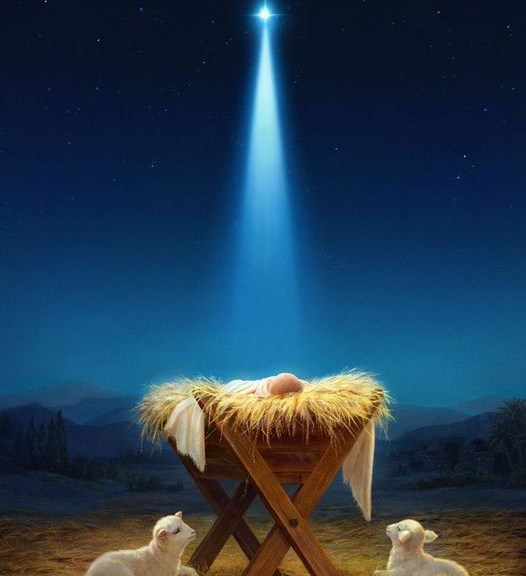
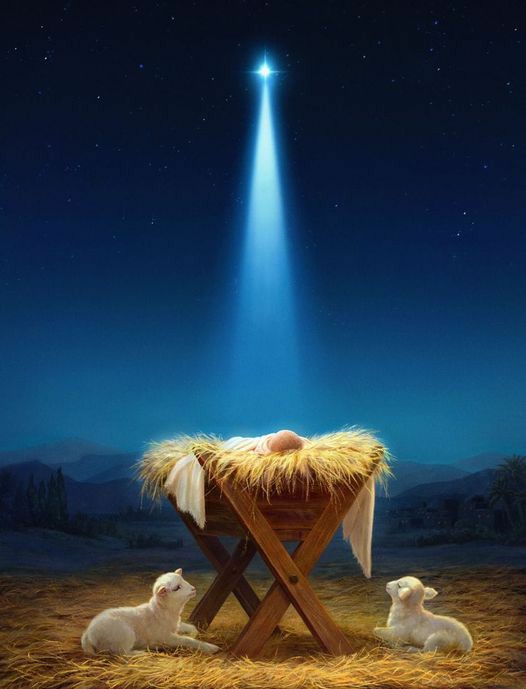
Heaven knows, I realize it can be awkward and downright embarrassing to talk about Jesus to a perfect stranger, but we are not called to live a life of comfort but rather a life of meaning in which God’s purpose for us prevails over our own desires and wishes. Santa and elves are cute and fun and they certainly can inspire whimsical decorations, but the greatest story of all the ages began with a nativity, not a sleigh. And there were no reindeer nor were there sumptuously decorated trees or fancy lights in that rustic stable oh so long ago in Bethlehem.
Jesus’s birth was an occasion of humility, and in coming to earth in order to be crucified for all the sins of mankind, the Son of God performed the ultimate act of selflessnes. His story and identity are things one can either accept or not, but no one can dispute He came from humble beginnings.
In our misguided efforts as mortals to equate an important event with fanfare and frivolity, we’ve replaced the manger with materialism and Christ with commercialism. An Ebenezer Scrooge isn’t needed for our narrative to take a tragic turn. Indeed, the only way that our story can become anything but tragic is for us to decide to do something drastic. And that drastic step is to put Christ back in Christmas.
Surely, since there would be no Christmas without a Christ, we should honor and remember Him before we pay homage to fanciful figures of pixies and white bearded men in fuzzy red suits.
But in our remembrance, we need to keep in mind that the gift God gave us through Jesus was not one that was forced upon us. It wasn’t like the present exchanges that are now such an integral part of Christmas. It was a gift that was given with no expectation of a return. God only asks that we accept the gift and, in return, the Light that came to brighten the entire world will illuminate our hearts, so that we can show and share the Love that is synonymous with Jesus not just once a year but the whole year through.
As Charles Spurgeon, the celebrated English”Prince of Pastors” once said, “The grandest Light in history is Jesus.”
Those who are readers of history have probably heard stories about Christians being persecuted for their beliefs. While it’s easy and even comforting- unless, of course, you hate Christians- to write these stories off as old wives’ tales of the medieval epoch – the truth is, Christians have been persecuted for centuries and probably always will be.
But wait, you interject, how can I say that a Christian would be persecuted today? Are we not a society of “tolerance?” This so-called tolerance is a funny thing. Even though it is supposed to apply to everyone regardless of their religion, race, gender, and so forth, it seems to pick favorites. And this picking and choosing seems far from random, however we might like to think or convince ourselves otherwise.
Now there are those of you who are against Christians, and,perhaps, some of you have a viable reason for this. Maybe you have been subjected to unjust condemnation from a person or people calling themselves a Christian, or maybe you come from a background where you have family members who were professing Christians and used their “Christianity” to in some way hurt or even abuse you.
I can see how you would feel and just as you get ready to say, “No, you couldn’t,” let me add that I understand because I went through this myself. I endured all sorts of abuse from people claiming to be “Christians,” starting at a very young age.
And yet, sooner or later-later in my case – I became a Christian myself. While I don’t doubt it would be far more challenging for some people to become a Christian than for others, if I, whom I somewhat humorously refer to as “doubting Sascha,” can become a Christian, anyone can.
As for Christian persecution in our current age, it is, for the most part and in civilized countries, far different than it once was, and much of it is underhanded and subversive. And more often than not, the persecution a Christian undergoes is from those who proudly latch onto the politically correct “banner” of tolerance, claiming they don’t hate or exclude anyone.
We humans are a rather sad bunch, for it would seem some part of us deep within ourselves believes that this is the way we ought to be – loving and tolerant and accepting of everyone – and yet, it’s quite clear we are incapable of putting this consistently into practice.
Over the past year, I have had first-hand experience with being persecuted for my Christian faith, and, ironically enough, the persecution came from those who see themselves as remarkably tolerant people.
The truth of the matter is, we mortals see ourselves through a looking glass that is filtered through a myriad of self-perceptions and assumptions we have made about who we are, what we believe, and how we treat others.
And, while we may bear some resemblance to who we really are in our minds, it’s highly likely the resemblance is far from accurate, if accurate at all.
As for the persecution I have endured, I’m quite certain that my persecutors would either deny or find a flimsy excuse for their behavior. After all, I was wearing a cross pendant around my neck and I ought to have better sense than that. I should remember how offended some people get by the very idea of a Savior they say never existed. As for my carrying around a pocket Bible in my purse, how could I be so insensitive to the fact that they hate a God they don’t believe in?
Well, quite frankly, I feel I can carry any book I want to in my purse and I also feel I have just as much right to wear a cross pendant around my neck as you or someone else have to wear a heart, star, or emblem of your choice.
I have also come to understand, through my encounters, that these words Jesus spoke so long ago- words many Christians rarely speak of as they aren’t pleasant to reflect upon- still apply today.
“Blessed are ye, when men shall revile you, and persecute you, and shall say all manner of evil against you falsely, for my sake. Rejoice, and be exceedingly glad: for great is your reward in heaven, for so persecuted they the prophets who were there before you.” (Matthew 5:11-13, KJV)
I know I’m talking about heaven and rewards in heaven, and those who want to believe heaven is part of a fairy-tale and doesn’t really exist will ask why they should endure something for a reward they will never get.
Well, I can’t convince you that heaven is real, and it isn’t my job to do that. Indeed, anything I might say to try to sway you to believe in heaven would be pointless because I haven’t ever been there and can’t give you first-hand descriptions of the place. Many of us have probably heard tales of streets paved with gold and pearly gates, but what heaven looks like isn’t really as important as what it is.
Those of us who make a deliberate decision to accept Jesus Christ as our Savior have been given the promise of a heaven in our future, but it’s something we have to accept on faith.
In the meantime, we can either keep our faith hidden and tucked away like those fancy china dishes we only pull out and eat on once in a blue moon, or we can boldly walk in our faith, owning it, confessing it, and sharing it with others.
Yes, the persecution of Christians is still happening, and it will continue and probably get even worse as this world becomes more and more broken by war, hate, violence, and hurt people hurting other people.
But, if you are a true Christian, you will readily choose persecution over denying your faith or keeping it hidden like a lamp under a blanket. For like me, you will understand that anything of true value that you have and have ever had and anything of merit within you is only because of the goodness of God.
Peace & Blessings,
Sascha
This page and all written material at A Pilgrim’s Odyssey is written by Sascha Norris. (C) Copyright 2023-2024 by Sascha Norris. All Rights Reserved.













 A Pilgrim's Odyssey