Tag Archives: peace

Of Christmas Lights and A World Now In Darkness

Most of us try not to talk too much about it, and it’s most likely because talking about things often makes them worse rather than helping them, but the darkness that descends upon the world after Christmas must certainly be one of the most depressing of all global events. The fact it happens every year, without fail, yet is consistently swept under the carpet, as if it’s simply par for the course, is even more tragic.

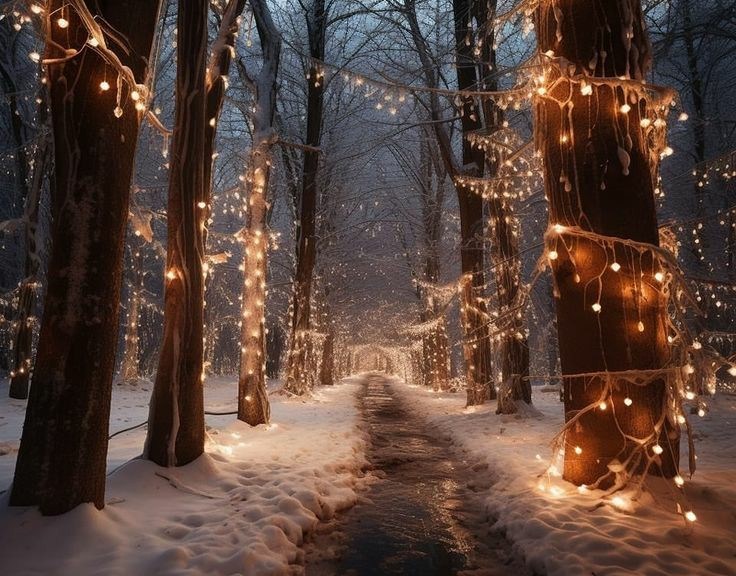
I once heard someone say that it’s the Lights of Christmas that make it such a joyful and merry time. I suppose, discounting the birth of Jesus, which is intended to be the reason for Christmas, but is mostly forgotten these days amid Santas, elves, and Grinches, the twinkling lights deserve credit as much as anything else for the festive atmosphere, redolent with the smell of calorie-laden treats and the sound of mirthful Christmas music wafting through the streets.

After all, originally, the Lights of Christmas were supposed to be representative of Jesus being the Light of the World, and, in centuries long gone by, Christmas trees were often decorated with lit candles rather than the strands of light most of us use today. What began as symbolic and somewhat understated tree decorations has, through the years, become nothing short of a cultural phenomenon. For the Christmas lights not only embellish the outside and inside of peoples’ homes and businesses but there are even gardens, parks, and similar venues where entire events are inspired by and centered around holiday lights.

And if it is indeed these resplendent Lights of Christmas that inspire the world to adopt a mindset of peace and good will to men, that encourage people who rarely perform a deed of kindness for anyone to seek out ways to show kindness to those who need it most, is there not a way to make the Lights of Christmas come alive in other seasons, too?

Although darkness has its place and, without it, one must question whether the light would be embraced with such fervor, if decorating common, everyday things such as trees and houses with lights makes humankind behave much better all-around than it usually does, what harm could there possibly be in finding a way to make the Lights of Christmas an everyday event?

Now before anyone imagines I’ve got my head up in the clouds or tries to “bring me back down to earth” by admonishing me to be “realistic,” I want to point out that if something won’t harm anyone and might possibly do some real good, what is the objection?

Many, if not most, of us recall how excited we were as children when Christmas season started every year. If you’re anything like me, you have memories, possibly involving dear ones now gone, of excitedly cruising through neighborhoods in order to admire the splendor of the Christmas lights.

Did you ever wish that you could capture everything you felt at those times in a bottle so that you could take it out later and relive those magical moments in time? I can’t begin to count the number of times I’ve closed my eyes and wanted to transport myself back to those Christmases of times long past, where strands of clear and multi-colored lights seemed to illuminate everything, making me feel that, at least at that moment, all was as it should be in the world.

There really isn’t anything that’s more of a let down than the after Christmas atmosphere. From discount tables at retail stores where holiday themed candles, toys and other gifts that weren’t desirable enough to be bought that particular year are piled in disorderly heaps to the bare trees, tossed carelessly on the curbs outside of peoples’ houses, the after Christmas sentiment is one of sadness, bittersweet nostalgia for what could have been or what once was, and general melancholia.

The very air we breathe, once the New Year has been heralded in and all signs of Christmas have vanished, seems heavy with despair.

It’s as if the world that rejoiced before is now weeping, and, no matter what you and I and others may pretend, many of us weep with it. Little do most of us know that the lights are one of the key elements missing from our lives. The lights were more than merely lights – they were a reminder that darkness will never prevail and that even if it only happens once a year – so far, at least – people are capable of coming together to create a more beautiful, kinder, and better world.

Peace and Blessings,

Sascha πŸ•Š

This page and all written material at A Pilgrim’s Odyssey is written by Sascha Norris. (C) Copyright 2023-2024 by Sascha Norris. All Rights Reserved.

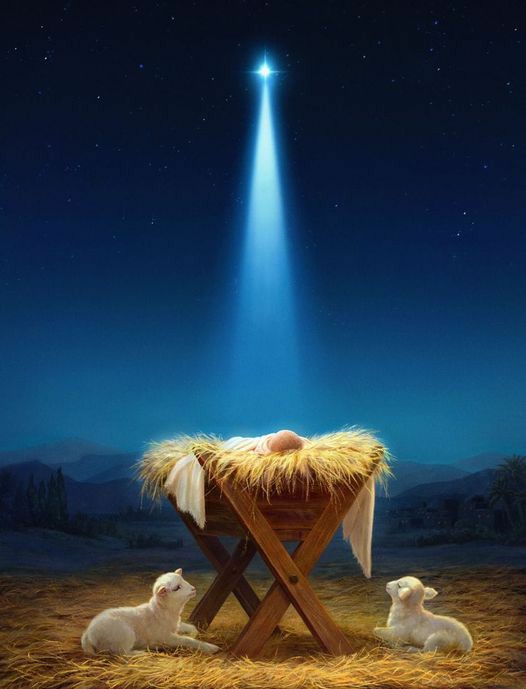
Image: “The Hope of Christmas” by Terry F.
The Greatest Gift Of All – Will You Accept It?

If you were brought up in a home where church was attended or even had friends or family who went to church regularly, I’m sure you’ve heard that “Jesus is the reason for the season.”

When I was a little girl, my grandmother wore a sweatshirt with the saying stitched boldly and in festive colors across the front. I still remember seeing her in the sweatshirt, and even though my mind knew the truth behind those words, my heart didn’t embrace it.

Like most people, the true meaning of Christmas became submerged beneath the transitory allure of the secular holiday, which, if we are honest, has little, if anything, to do with Bethlehem or a Savior named Jesus being born.

How ironic it is that a movie called “The Grinch Stole Christmas” has become almost a cultural phenomenon when the truth of the matter is that we, as humans, stole the meaning of Christmas long before any film about a Grinch was ever made.

In a way, those of us who celebrate Christmas as mostly a time of gift-wrapping and present-swapping, parties involving vast quantities of eggnog, hot cocoa, and cookies, along with Christmas songs and visits from an imaginary Santa have stolen Christmas. 

Now before you think I must have lost my mind in saying such a thing, let me explain what I mean.

In much the same way that the iconic Grinch tries to steal Christmas from the townspeople where he lives, we have tried to steal Christmas from Jesus. We’ve wrapped up the simple story of a baby born in a manger and left it under a tree, while giving our attention and adulation to secular stories where the key figures aren’t three wise men but instead elves, reindeer, and Mr.and Mrs. Claus. As for Bethlehem, it’s become the North Pole.

Once again, I feel I should explain something before I go further. I understand that there are those who believe Jesus was only a good man and not the Son of God. I’m not judging any of my readers who don’t believe as I do. However, even if we differ in terms of who we believe Jesus is, we surely agree that Christmas is a day that is named in his honor.

It’s perplexing to me that a baby of such humble beginnings is the person behind a time of year in which excess is seen in everything and where opulent attire and extravagant presents are often not only given but expected.

Yet, for every person or family for whom it’s the “most wonderful time of the year,” there is another person or family for whom the season is far from wonderful. As a society, it’s become politically correct to pay lip service to helping the homeless or donating to the “less fortunate,” but if the desire to do these things dwelled in our hearts, we wouldn’t need a special time of the year to remember them.

If we even pretend to attach any religious or spiritual significance to Christmas whatsoever, no one should have to inspire us to want to show love, compassion, and kindness to others. And when we fully comprehend that without the most important gift the world has ever known, Jesus, there would be no genuine hope for any of us, we realize that regardless of what we want, we have an obligation to honor that Gift by sharing it with those around us.

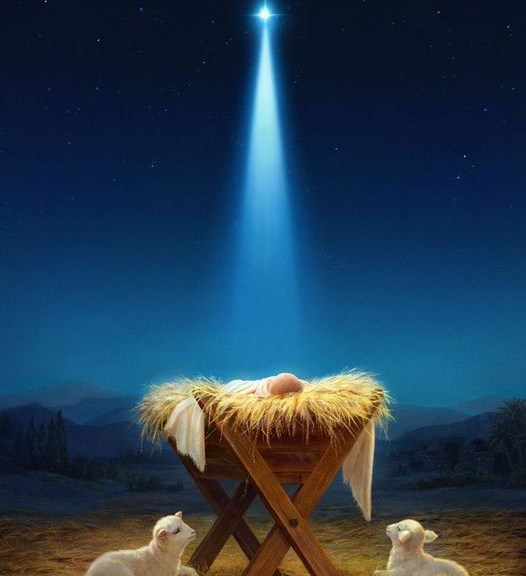
Heaven knows, I realize it can be awkward and downright embarrassing to talk about Jesus to a perfect stranger, but we are not called to live a life of comfort but rather a life of meaning in which God’s purpose for us prevails over our own desires and wishes. Santa and elves are cute and fun and they certainly can inspire whimsical decorations, but the greatest story of all the ages began with a nativity, not a sleigh. And there were no reindeer nor were there sumptuously decorated trees or fancy lights in that rustic stable oh so long ago in Bethlehem.

Jesus’s birth was an occasion of humility, and in coming to earth in order to be crucified for all the sins of mankind, the Son of God performed the ultimate act of selflessnes. His story and identity are things one can either accept or not, but no one can dispute He came from humble beginnings.

In our misguided efforts as mortals to equate an important event with fanfare and frivolity, we’ve replaced the manger with materialism and Christ with commercialism. An Ebenezer Scrooge isn’t needed for our narrative to take a tragic turn. Indeed, the only way that our story can become anything but tragic is for us to decide to do something drastic. And that drastic step is to put Christ back in Christmas.

Surely, since there would be no Christmas without a Christ, we should honor and remember Him before we pay homage to fanciful figures of pixies and white bearded men in fuzzy red suits.

But in our remembrance, we need to keep in mind that the gift God gave us through Jesus was not one that was forced upon us. It wasn’t like the present exchanges that are now such an integral part of Christmas. It was a gift that was given with no expectation of a return. God only asks that we accept the gift and, in return, the Light that came to brighten the entire world will illuminate our hearts, so that we can show and share the Love that is synonymous with Jesus not just once a year but the whole year through.

As Charles Spurgeon, the celebrated English”Prince of Pastors” once said, “The grandest Light in history is Jesus.”

Peace and Blessings,

Sascha πŸ•Š