Tag Archives: Mortality

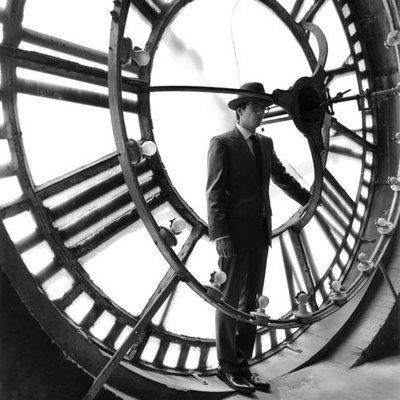
Will Time Say Nothing But I Told You So?

I wish that I could tell you not to mind about the little things. I wish I could say the word, once spoken, could be taken back. I would love to assure you that you will always have one more chance to get things “right.” Yet, I can’t.

I can tell you many things if my only objective is to nourish false hope. If one doesn’t care whether truth puts on the mask of falsehood or whether wishful thinking replaces reality, one will listen to the worldly feel-good recipes of comforting assurance that it is “never too late.”

And while it eases the existentialistic pain of day-to-day existence to imagine things are possible that really aren’t, I’m here to let you know that living in a dream-world keeps you from being prepared for the inevitable tragedies that come with time.

As W. H. Auden wrote in his hauntingly prophetic poem,  “Time will say nothing but I told you so.” For “it only knows the price we have to pay.”

The price is high – too high for mortals, for we wish to live in the land of Forever-Hopeful, where miracles that defy logic occur and where we convince ourselves that our lives will give us enough joy, love, peace, and happiness to outweigh all of the grief, cruelty,  pain and suffering.

I could attempt to give you answers for this, but many would not listen. And who am I to solve the riddles of humanity or to explain why things happen as they do? I have beliefs, and they provide me with a much needed blanket of solace when everything about life stops making sense (if indeed it ever did) and when my own world appears to be shattering. 

But who am I to think that what comforts me will comfort you? We are not here to be consoled. To be assured that things are better than they are only offers an escape from the reality of what is.

While believing, for example, in an all-knowing, loving and infinitely merciful Creator sounds good and while we may indeed find facts that back up such a belief, if we believe in such a Creator merely to bear the weight of our worldly burdens more easily, we set ourselves up for not merely disappointment, but, ultimately,  disillusionment. 

There are tragedies the like of which will remain forever mysteries to us as we walk this earth. We will lose the things and people we love most, if not tomorrow, then eventually. And there won’t be tidy explanations wrapped up in pretty paper like Christmas presents under a tree.

We will make mistakes that are irreversible and we will cause others and ourselves pain with little to no chance of reparation,  not even to ourselves.

And through it all, there will be – if we are lucky (or, perhaps, unlucky) – those who assure us that everything will be okay, that all is not lost, and that we can begin anew each day, with hopes of still making our dreams come true.

However well-intentioned such advice is, it is far better not to wait until it is truly too late to distance ourselves from the chloroform of counterfeit hope.

J. R. Tolkien once wrote, “False hope is more dangerous than fears.”

How much better it is to begin to weigh each word we speak, to think through the choices we make with greater perspicacity, to make more time for that which is of eternal importance rather than expending our energies on the ephemerally urgent.

Although there is nothing wrong with clinging to a vision of a life better, grander,  and more beautiful than the one you are living now and while having goals and dreams are an essential component of living with purpose, it is even more important to understand how fragile this life truly is and how quickly the things we take for granted now can be taken from us.

“Will time say nothing but I told you so?” Like Auden,  if I could tell you, I would let you know.

Sascha 🦉

This page and a written material at A Pilgrim’s Odyssey is written by Sascha Norris. (C) Copyright 2023-2024 by Sascha Norris. All Rights Reserved

(Images were lensed by the preeminent New-York based photographer Rodney Smith (1947-2016)

Life’s Defining Moments: What Do They Define?

What are life’s defining moments, and are they chosen for us or by us? This is a question I have often asked in recent times, and those of you who may have had similar inquiries will most likely be unsurprised at hearing that the answers seem elusive.

Are life’s defining moments inherently spiritual or does it depend on the moment itself and our own belief system? For me, the preeminent question within the question itself would be, what do the moments define? If they remind us of our own mortality and compel us to see life less as the random series of events it may often seem to be and more of a series of circumstances along a path of purpose, then they define not only moments but life itself.

I have often said that it’s the moments in life that, in the end, we will remember most vividly, but I overlooked an important caveat when I made such a declaration. Mere moments, random moments, moments like any other will rarely be remembered. Rather, it will be the moments that changed everything in our lives in a split second, for better or for worse, that will leave behind their indelible stamp.

All too often, particularly in a culture where the handwritten word has been replaced by email and the heartfelt conversation with a text message, we fail to grasp the seriousness of life in all its brevity. We seem oblivious to the fact that at some point, tomorrow will be the last tomorrow and that all that we love that is living will either die before us or live after us.

Poet Mary Oliver, whose work seems to be infused with an uncanny comprehension of both life’s sacredness and its impermanence once said, “To live in this world, you must be able to do three things; to love what is mortal, to hold it against your bones knowing your own life depends on it, and when the time comes to let it go, let it go.”

For me, Mary’s poetic wisdom reaches far beyond the words themselves. Her poem can be adopted as a guidebook for how one should live day by day, recognizing that everything that breathes is mortal and that all that is alive, including those plants, trees, and flowers that we don’t usually think of as sentient “beings,” will at some point die.

We are so busy trying to impress other people, building lives of success rather than significance, making money to purchase things that, much of the time, we don’t even need that the sacred portion of life remains behind a glass cabinet, like an antique vase we never touch. If only we were to slow down, open the cabinet and take out the vase, rather than allowing it to remain unused, accumulating dust.

It’s ironic how quick we often are to impose definitions on things, people, and experiences- yet, miraculously, we let life’s defining moments sweep past us without taking time to interpret them. It is only later, in retrospect, that we often become cognizant of the fact that something monumental happened to us, and because of the lapse between the past and present, deciphering the full import of those moments can be like translating a language we have never learned.

It has been said that in a world where anything seems to go, nothing remains sacred. Of course, for those who, like me, hold fast to an ongoing relationship with God, there will always be the sacredness of spirituality. But for those who have no faith and believe in nothing outside themselve, finding the sacred in today’s world might well be like trying to find a single diamond in a heap of cubic zirconia stones while blindfolded.

Yet, I wish to present the idea that the sacred still exists for everyone, and while I think God makes finding the sacred easier, it can also be found in the absorption, acknowledgement, and appreciation, of life’s defining moments.

We will never master the art of defining life itself, for it was never intended to be defined. And defining people isn’t our job but rather the assignment of a Higher Power. As for defining circumstances and situations, there are generally too many variables and perspectives involved to achieve an accurate conjecture.

But what we can define are moments- or, perhaps, they define us.

Peace & Blessings,

Sascha 🦉

This page and all written material at A Pilgrim’s Odyssey is written by Sascha Norris. (C) Copyright 2023-2024 by Sascha Norris. All Rights Reserved.

Image: Actress Emma Watson as “Rebel Belle,” a cover story for Vanity Fair, lensed by photographer Tim Walker; Stylist: Jessica Diehl; March 2017