Tag Archives: love

FLACO, THE LITTLE OWL WHO CHANGED THE WORLD

What can one say about a little owl who made an unforgettable impact on not only the nation but the whole world?

It’s all too easy to say, “He’s just an owl,” imagining that in being dismissive, somehow the difference that Flaco made in the lives of millions of people might be diminished.

But reducing the significance of something in our own minds never alters the breadth of its meaning, and Flaco’s year of freedom and how it affected the world is no exception.

In case you think that appreciation for owls is a new phenomenon, it should be noted that owls have been regarded with admiration and even a certain amount of awe for centuries. In ancient mythology, the goddess of wisdom, Athena, was said to have chosen the owl as her companion, and owls have continued to be associated with wisdom, knowledge, intelligence, perspicacity, vigilance, and enlightenment throughout history. In more recent times, such well known public figures as social reformer and modern nursing founder Florence Nightingale and painter and sculptor Pablo Picasso have kept owls as pets, with Florence choosing to bestow the name Athena on her pet screech owl, whom she rescued from abusive bullies on a trip to Italy.

And in a way, that is what fearless Flaco became for all of us – a pet for the millions of people who loved him. He represented the underbird who nobody thinks will be able to survive yet who manages to thrive like a feathered samurai.

From perching on water towers to visiting the fire escapes of surprised NYC residents and peering in their windows, Flaco was as much debonair bandit as he was regal prince. One might find him just as readily devouring rat sushi as posing for the hootarazzi like the owlcon that he was.

Unsurprisingly, Flaco’s owlventures became the subject du jour in news publications around the world and as he quickly became the world’s most photographed owl, we who followed his escapades awaited each new episode of The Flaco Chronicles with as much anticipation as that of a child eager to open presents on Christmas morning.

There are some who feel this worldwide fixation on a single owl is not only peculiar but downright ridiculous. In trying to strengthen their case, they bring up news they feel is of much graver import – such as casualties in Gaza and the war in the Ukraine. Sadly, in pointing towards these seemingly more “important” issues and attempting to diminish the significance of Flaco and his life by doing so, these people – however well intentioned they may be- are only making it clear why we became so captivated by and attached to Flaco in the first place.

Although I don’t want to make this about me when it’s mostly about Flaco, what I am about to share does relate to Flaco. And because it may strike a chord with someone else, I feel I should share it.

Like Flaco, I was somewhat of a captive for a large portion of my life. The decisions that should have been made by me, both big and small, were made for me by those parental and authority figures who had power over me and my life.

Thus, seeing Flaco start afresh, breaking free from the shackles of the zoo that had so thoroughly suppressed his free spirited self, ignited in me a spark of hope, making me feel that I could do the same. Of course, unlike a person, whose attempts to achieve freedom might be hindered by all kinds of complications such as intimidation, threats, and similar psychologically manipulative strategies, Flaco was able to liberate himself rather effortlessly. And aside from a few unsuccessful attempts to recapture him, Flaco soared high on the wings of freedom, with the enthusiastic support of thousands upon thousands of fans providing the wind beneath his wings.

As those who are continuing to follow the rise and fall of Flaco know all too well, there are two opposing parties who, although sharing a mutual love of Flaco, disagree (and sometimes vehemently) as to whether returning Flaco to the zoo that he escaped from would have been better than allowing him to remain free.

I have always felt that keeping an open mind means trying to understand different perspectives, whether one agrees with them or not. For much of what we learn in life is taught to us through our relationships with others. Even those who wish to remain solitary are forced to coexist with other sentient beings.

That being said, although I can see why those who believe Flaco’s life was put at dire risk by him being thrust into an unknown city filled with a plethora of dangers feel as they do, the lasting impact Flaco has made on a world yearning for a beacon of hope, freedom and resilience such as he represented, would never have occurred if he has stayed in or been returned to a cage. So, although I am not saying the vandal who presumably inadvertently enabled his escape should not bear some repercussions for his or her actions, what I am saying is that without that event taking place, Flaco’s life would have been one of the average captive owl, forgotten in both life and death, with no lasting impact on anyone aside from his zookeepers and the visitors who strolled past his cage.

Lest you think I am saying that Flaco’s early death was a sacrifice worth making because of the difference he made on the world through his year of freedom, that is not my intention nor is it what I believe.

Yet, as is often the case in life, remarkable achievements generally come at a cost. The world is difficult enough when one has everything going in one’s favor. For Flaco, the odds were stacked against his wings, even as he soared to astounding heights, taking us with him on each new peak of owlventure.

I think, if you and I and anyone who happens to be reading this are honest with ourselves, we will admit that, in our hearts, we don’t think owls were ever intended to be kept in cages. Owls are wild, free beings, and even when they have been kept as pets, the incidents of them being kept in that capacity have been few and far between.

And if owls were not supposed to be wild and free, we wouldn’t have been so entranced by Flaco’s journey. We were rooting for him because we knew that he was finally getting a chance to do what he had been created to do from the beginning. He was fulfilling his calling as a bird in the wild, and, even though New York was far from the ideal place for him to embrace his mission, it happened to be where he ended up, and relocating him appeared to be a problematic venture. With each new rat Flaco procured for his dinner, we became more and more convinced that his innate hunting skills were taking over and that he was getting accustomed to depending on himself.

For many of us, Flaco’s success when it came to defying the odds made us feel better equipped to handle obstacles in our own lives. His bravery gave us the hope we needed to face uncertain tomorrows of our own and his tenacity made us feel that we might be stronger than we often give ourselves credit for.

But more than anything else, Flaco showed us that in spite of our differences as a society, when we find a common love to share, we can come together in a way that is truly miraculous. And through this coming together, we can forge connections that would never have come about any other way.

In life, we tend to find the meaning in an event or set of circumstances that we are ready to accept. If we are not prepared to grasp or benefit from a certain lesson or message, then, no matter how ostensibly the universe tries to get us to hear it, our ears will remain deaf.

Those who choose to see Flaco’s life as needlessly cut short or who decide to see it as a tragedy, will never understand what Flaco intended for his life to mean. He truly wanted to be part of the great, big world outside his cage and beyond the zoo.

Perhaps, Flaco knew that he could give something to the world that we needed. Maybe he knew that we were in want of a reminder that life is not about how many breaths you take or how many days you live but rather about how many breathtaking moments you experience and how many lives you touch along the way.

No, nothing can bring Flaco back to this earth, but if we live our lives differently because of him, if we give more grace when it is needed, both to ourselves and others, if we learn to face our fears more readily, rather than ignoring them or running away from them, and, most importantly of all, if we develop the capacity to look beyond gender, race, spiritual and political beliefs and see ourselves united through our common humanity – as we have been through our love of Flaco – then Flaco’s life will have never been in vain.

Peace & Blessings,

Sascha 🦉

This page and all written material at A Pilgrim’s Odyssey is written by Sascha Norris. (C) Copyright 2023-2024 by Sascha Norris. All Rights Reserved.

Photos of Flaco are (cover) by David Barrett (i.e., Manhattan Bird Alert) and (article collage) by Mark, known as Above_96th on Twitter/X and Instagram.

Thank you to those photographers, including David and Mark, who captured Flaco’s unparalleled beauty so magnificently in photos and videos.
The Love That Never Fails

We are all designed with a need to both give and receive love. This need is intertwined into the innermost part of our being. You might say that it is part of our DNA. Try as we might to convince ourselves that we don’t require love in our lives to be content or happy, the truth is that the need to be loved is part of being human. And the need to show love to others is present in all but the most narcissistic of mortals. .

The difficulty in both of these needs is that no earthly love can or will ever fulfill us. For the inadequacy that is within a mortal’s ability to love is bound up in his or her very essence.

We are created beings, formed by an all-knowing Creator whose nature is the epitome of love, regardless of how it might appear otherwise from the broken world we all live in. And our Creator’s perfect love is far beyond the scope of human comprehension. In fact, that which we humans call “love” is most likely so far removed from His love for us, that one might wonder if it even resembles it.

For humans, love, no matter what we say or even think of it as, is all too often a series of deposits and withdrawals, a pattern of giving and taking, ,in which careful mental notes are kept of who did what, gave what, and said what. Egos are bruised, feelings hurt, and hearts broken, all in the name of what we call “love.”

If God’s love for humanity were akin to our “love” for our fellow mortals, we would already have been wiped off the face of the earth. Love was never intended to be a transaction or a power play of sorts. And the fact that it so often is makes it not the least bit surprising that millions of people around the world are living bereft of genuine love.

Every Valentine’s Day, the stores cater to the romantic ideal, overloading our conscious and subconscious minds with the false idea that boxes of chocolates, flowers, and similar gifts are a reflection of or a substitute for love. None of these things are lasting comfort to the soul aching for true love and acceptance, the soul seeking a mutual connection with someone who understands them, or, at least, makes the effort to.

I hope my readers will not imagine that I see myself as any sort of expert on the subject of love, for all I really know is what it should be. I haven’t the faintest idea of how to perfectly love anyone, and I don’t think any mortal does. Oh, some of us imagine ourselves to be experts on the subject, but the world we live in shows what a poor comprehension we, as a society, have of love. None of us are experts – we’re just people who think we know a lot about things that we have very little, if any, knowledge about. Mostly, what we have are “answers” for questions that we never even understood to begin with.

French anthropologist and ethnologist Claude Levi-Strauss once said, “The wise man doesn’t give the right answers, he poses the right questions.” The problem with most of us is that we don’t know what the right questions are, yet we demand answers anyway.

And while this sort of behavior might work reasonably well in something like math or science, since not having the right questions would eventually become obvious, in the realm of love, things aren’t so clear-cut. For we humans aren’t able to be defined on pieces of paper or reduced to algorithms.

We were created as multi-faceted beings with emotional needs so subject to change and circumstantial variables that they might well be compared to the weather that alters with the times and seasons.

In this respect, we are very much unlike God even though we are made in His image, for Hebrews 13:8 tells us that He ” is the same yesterday today and forever.”

As mortals with emotional baggage from past hurts and sorrows, we express love through the lens of this trauma, no matter how diligently we may have tried to eradicate the damage in order to achieve so-called emotional “health.”

No matter how much we want to be capable of purely loving another living creature, we will always be on the cusp of this achievement, knowing what we want yet also feeling it is right beyond our grasp, much as one might feel seeing a rare jewel behind a jewelry store’s glass case.

And, most of the time, we actually are far removed from loving anyone. We are, after all, the creatures who engage in such nonsense as “tough love,” where hurtful words and actions are spoken and performed while simultaneously paying lip service to wanting “the best” for the other person. Moreover, many instances of horrendous abuse of all kinds is done under love’s name.

Love seems to be something mortals latch onto as a justification for all kinds of vile behavior, leaving many of us wondering what love even is or what it is supposed to be.

C.S. Lewis, a writer whose knowledge on the subject of love is undoubtedly far more comprehensive in scope than mine, made a pertinent point in his book, “The Four Loves,” when he said that many of those who say that God is love mistakenly reverse the sentence and say love is God.

By making love and God one and the same, a person attributes behavior that is utterly unloving to both love and God which is not only wrong but blasphemous.

The Bible gives clear indicators of God’s character and although He is love, actions done under the name of love that go against God’s character are not actually loving, regardless of how they may be perceived to those engaging in them.

Much of the suffering we endure is caused by erroneous beliefs about love and misguided attempts to find it where it does not exist or exists in a toxic or twisted form. We can say all we want to about self-love being the most important thing and we can convince ourselves of our own self-sufficiency until we are nearly blue in the face, but we will never stop searching for love in some form or fashion. For some, it may be in the form of friendship rather than romance and for others it could be adopting a pet. Whatever the case may be, our spiritual selves crave love as our bodies need oxygen.

Sophocles once wrote, “One word frees us of all the weight and pain of life; That word is love.”

Yet, we don’t need a Greek tragedian to reiterate what is being expressed within our beings every day. To deny the need to love and be loved is to deny our humanity. And, those who believe they are the exception are doing themselves more harm than good because they are attempting to go against nature, something that even the Stoics cautioned against.

However, in spite of how deeply, sincerely or unconditionally any of us try to love another and regardless of how intent we may be on finding this love for ourselves, we will always be ultimately disappointed. Even if a love is “forever,” we are mortals and this means the people we love die. Or we die and leave loved ones behind.

Much as we want it to be otherwise and much as society tries to get us to believe something else, there is no mortal, earthly love that will not eventually end in some way. We will be abandoned or we will abandon someone else.

The good news is that there is a love that never fails and that we can rely on, no matter what. And the wonderful part of it is that this love is far better than all the others combined because it is a love that loves us exactly as we are. If you think this sounds too good to be true, you are certainly on to something there. It is more than we deserve and yet it is ours the second we accept it. It is God’s Love, a love more pure, more loyal, more all-encompassing than anything we can find within this world.

God’s Love is the Love that will never fail, the love that doesn’t punish, doesn’t abuse, never holds grudges and never tries to make us into something other than we are just so we will be “lovable.” Yes, God does seek to mold us and change us if we allow Him to do so. Yet His Love is never contingent on us conforming to a preconceived image or idea.

God gifts us with verses in I Corinthians that describe what His love is perfectly.

“Love is patient, love is kind. It does not envy, it does not boast, it is not proud. It does not dishonor others, it is not self-seeking, it is not easily angered, it keeps no record of wrongs. Love does not delight in evil but rejoices with the truth. It always protects, always trusts, always hopes, always perseveres. Love never fails.”

Although none of us can hope to embody this love completely this side of heaven, these verses serve as a constant reminder of what Love was intended to be and the Love we will always find in God – the perfect Love that never fails.

Peace & Blessings,

Sascha 🦉

This page and all written material at A Pilgrim’s Odyssey is written by Sascha Norris. (C) Copyright 2023-2024 by Sascha Norris. All Rights Reserved.

The Greatest Gift Of All – Will You Accept It?

If you were brought up in a home where church was attended or even had friends or family who went to church regularly, I’m sure you’ve heard that “Jesus is the reason for the season.”

When I was a little girl, my grandmother wore a sweatshirt with the saying stitched boldly and in festive colors across the front. I still remember seeing her in the sweatshirt, and even though my mind knew the truth behind those words, my heart didn’t embrace it.

Like most people, the true meaning of Christmas became submerged beneath the transitory allure of the secular holiday, which, if we are honest, has little, if anything, to do with Bethlehem or a Savior named Jesus being born.

How ironic it is that a movie called “The Grinch Stole Christmas” has become almost a cultural phenomenon when the truth of the matter is that we, as humans, stole the meaning of Christmas long before any film about a Grinch was ever made.

In a way, those of us who celebrate Christmas as mostly a time of gift-wrapping and present-swapping, parties involving vast quantities of eggnog, hot cocoa, and cookies, along with Christmas songs and visits from an imaginary Santa have stolen Christmas. 

Now before you think I must have lost my mind in saying such a thing, let me explain what I mean.

In much the same way that the iconic Grinch tries to steal Christmas from the townspeople where he lives, we have tried to steal Christmas from Jesus. We’ve wrapped up the simple story of a baby born in a manger and left it under a tree, while giving our attention and adulation to secular stories where the key figures aren’t three wise men but instead elves, reindeer, and Mr.and Mrs. Claus. As for Bethlehem, it’s become the North Pole.

Once again, I feel I should explain something before I go further. I understand that there are those who believe Jesus was only a good man and not the Son of God. I’m not judging any of my readers who don’t believe as I do. However, even if we differ in terms of who we believe Jesus is, we surely agree that Christmas is a day that is named in his honor.

It’s perplexing to me that a baby of such humble beginnings is the person behind a time of year in which excess is seen in everything and where opulent attire and extravagant presents are often not only given but expected.

Yet, for every person or family for whom it’s the “most wonderful time of the year,” there is another person or family for whom the season is far from wonderful. As a society, it’s become politically correct to pay lip service to helping the homeless or donating to the “less fortunate,” but if the desire to do these things dwelled in our hearts, we wouldn’t need a special time of the year to remember them.

If we even pretend to attach any religious or spiritual significance to Christmas whatsoever, no one should have to inspire us to want to show love, compassion, and kindness to others. And when we fully comprehend that without the most important gift the world has ever known, Jesus, there would be no genuine hope for any of us, we realize that regardless of what we want, we have an obligation to honor that Gift by sharing it with those around us.

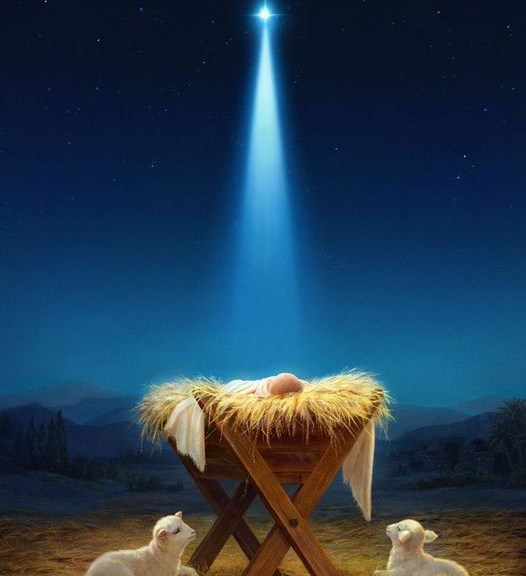
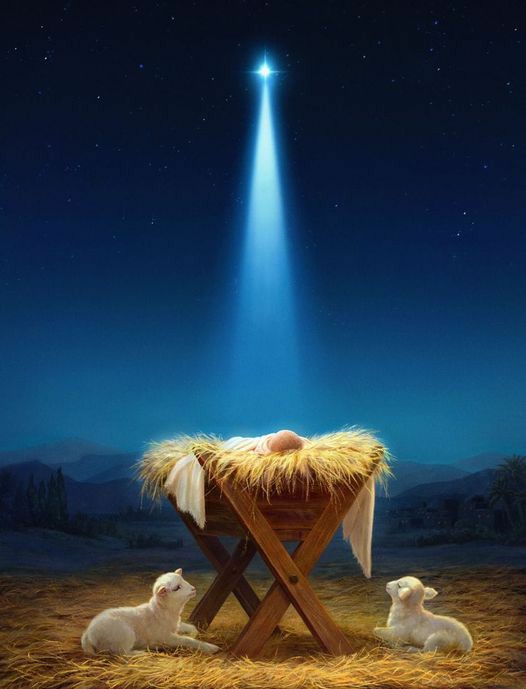
Heaven knows, I realize it can be awkward and downright embarrassing to talk about Jesus to a perfect stranger, but we are not called to live a life of comfort but rather a life of meaning in which God’s purpose for us prevails over our own desires and wishes. Santa and elves are cute and fun and they certainly can inspire whimsical decorations, but the greatest story of all the ages began with a nativity, not a sleigh. And there were no reindeer nor were there sumptuously decorated trees or fancy lights in that rustic stable oh so long ago in Bethlehem.

Jesus’s birth was an occasion of humility, and in coming to earth in order to be crucified for all the sins of mankind, the Son of God performed the ultimate act of selflessnes. His story and identity are things one can either accept or not, but no one can dispute He came from humble beginnings.

In our misguided efforts as mortals to equate an important event with fanfare and frivolity, we’ve replaced the manger with materialism and Christ with commercialism. An Ebenezer Scrooge isn’t needed for our narrative to take a tragic turn. Indeed, the only way that our story can become anything but tragic is for us to decide to do something drastic. And that drastic step is to put Christ back in Christmas.

Surely, since there would be no Christmas without a Christ, we should honor and remember Him before we pay homage to fanciful figures of pixies and white bearded men in fuzzy red suits.

But in our remembrance, we need to keep in mind that the gift God gave us through Jesus was not one that was forced upon us. It wasn’t like the present exchanges that are now such an integral part of Christmas. It was a gift that was given with no expectation of a return. God only asks that we accept the gift and, in return, the Light that came to brighten the entire world will illuminate our hearts, so that we can show and share the Love that is synonymous with Jesus not just once a year but the whole year through.

As Charles Spurgeon, the celebrated English”Prince of Pastors” once said, “The grandest Light in history is Jesus.”

Peace and Blessings,

Sascha 🕊