Tag Archives: jesuschrist

THE PROMISE OF ETERNAL LIFE: FAIRY TALE OR TRUTH?

The dogwood tree bloomed outside my bedroom window this past week and as I admired the beauty of organic nature, I also reflected on the finite nature of all earthly things that live. From people, animals and insects to trees, plants, and flowers, the common component of all these things is that they will all die.

Perhaps, this is one of the most easily understood reasons that the religion of Christianity appeals to someone. That promise of a life after this one – and an eternal one, at that – brings much needed hope to dark days in an increasingly broken and uncertain world.

If you are anything like me, you enjoyed reading fairy tales as a child. The heroic figures of fanciful stories, embellished with the often hyperbolic descriptions that enhance their appeal not only attract us as children but they also speak to the still childlike parts of ourselves when we reach adulthood. If being a sophisticated “adult” is important to us, we may deny our interest in fairytales. For our society is much more likely to encourage us to be “productive” citizens than visionary dreamers.

As C. S. Lewis, a fervent proponent of fairy tale reading once said, “One day you will be old enough to start reading fairy tales again.” Interestingly, he also spoke of reading fairy tapes in secret at the age of ten, declaring he would have felt shame had his predilection for them been discovered.

Yet, there’s no denying that Christianity has a fairy tale aspect to it, for when one starts incorporating miracles, babies born of virgins, and people being raised from the dead into stories one would certainly classify the genre as science fiction, fantasy, or a little bit of both.

It’s an ironic twist of how things often play out, that a day like Easter, a holiday that is supposed to celebrate Jesus’s Resurrection from the Dead, has become enveloped in a candy coated wrapping of pastel hued Easter eggs that are the main attraction of Easter egg hunts, oversized bunnies (people dressed up in rabbit costumes), and baskets brimming over with candy and other sugary treats. If we are too “sophisticated” for fairy tales, should we not also be too “sophisticated” for such childish celebrations?

Now before you imagine that I was never a child myself or that, if I was, I never enjoyed the so-called “childish” things, I remember being four or five years old and fetching all the hidden Easter eggs at an elementary school across from where my grandparents lived. With the naive excitement of a child, I imagined that since I had found the eggs, they were all mine. Of course, I didn’t end up keeping them, lest you wonder how the story turned out.

I realize many of the Easter celebrations I have mentioned are “for children,” but the trouble is, they aren’t giving anyone, including the children, an accurate idea of what Easter is intended to signify.

If one does even a fair amount of research, the fact that the “Christian” Easter originated in paganism is easily discovered. The eggs are connected with fertility and the name itself, “Easter,” is inspired by the pagan goddess of fertility, known as “Ostara” or “Eoster.” As for the rabbit, it also has origins in paganism. Bede, an early medieval monk who has often been regarded as the father of English history, once noted that in eighth century England, the month of April was called Eosturmonath after the goddess Eoster. He went on to write that a pagan festival of Spring in the name of this goddess had become incorporated into Christianity’s celebration of Christ’s Resurrection.

These worldly, or, to be more specific, pagan rituals have been incorporated into a holiday named by and celebrated by professing Christians, and if and when the pagan aspects of the day are embraced (as they will be), remaining mindful of the genuine hope found in Christ’s Resurrection is even more important.

In all truth, we don’t need the stardust and tinsel of made up fairy tales to give us hope. People dressed up as giant Easter bunnies and eggs dyed nearly every shade under the rainbow are temporal attractions, offering a joy that is both short lived and lacking in genuine fulfillment.

We can say what we like about Christianity being a fairy tale and can mock those who adhere to its teachings, but unless one has not ever believed in anything that wasn’t visible or that didn’t obey the “rules” of logic, discounting Christianity based simply on the fact it has supernatural elements isn’t a solid argument.

Although Sigmund Freud once called Christianity a “fairy tale ” and his followers replaced this with “folk tale,” those who open their minds enough to do some research know that Jesus was a real person and that the accounts of him in the New Testament were eyewitness accounts written before and after his death.

Easter, if one believes the research on its origins, is pagan and yet the same things being celebrated by pagans in this Springtime holiday- hope, life rebirth and renewal are also what Jesus offers those who follow Him.

So, eggs, Easter baskets, and bunny rabbit impersonators aside, we can all agree on the sentiments behind the holiday, even if those sentiments are evoked by different things. And, perhaps, those who have not yet gotten to know Jesus or taken the time to contemplate whether there is indeed truth in his identity as the Son of God as well as hope in the promise He offers of eternal life, will do so.

As C.S. Lewis said, “Christianity is both a myth and a fact. It’s unique. It’s the true myth.”

And just as goodness triumphs over wickedness in the fairy tales we love most, and just as redemption is offered to villians who seem beyond hope, so, too, Jesus offers us both redemption and promises us the ultimate triumph of good over evil, if not in this life, then in the next.

Peace & Blessings,

Sascha πŸ•Š

March 31. 2024.

This page and all written material at A Pilgrim’s Odyssey is written by Sascha Norris. (C) Copyright 2023-2024 by Sascha Norris. All Rights Reserved.

(Images are: Cover Art- Easter Lamb of God and Cross by Sara Tee. Other images by artists John Pototschnik and Yongsung Kim)

Of Christmas Lights and A World Now In Darkness

Most of us try not to talk too much about it, and it’s most likely because talking about things often makes them worse rather than helping them, but the darkness that descends upon the world after Christmas must certainly be one of the most depressing of all global events. The fact it happens every year, without fail, yet is consistently swept under the carpet, as if it’s simply par for the course, is even more tragic.

I once heard someone say that it’s the Lights of Christmas that make it such a joyful and merry time. I suppose, discounting the birth of Jesus, which is intended to be the reason for Christmas, but is mostly forgotten these days amid Santas, elves, and Grinches, the twinkling lights deserve credit as much as anything else for the festive atmosphere, redolent with the smell of calorie-laden treats and the sound of mirthful Christmas music wafting through the streets.

After all, originally, the Lights of Christmas were supposed to be representative of Jesus being the Light of the World, and, in centuries long gone by, Christmas trees were often decorated with lit candles rather than the strands of light most of us use today. What began as symbolic and somewhat understated tree decorations has, through the years, become nothing short of a cultural phenomenon. For the Christmas lights not only embellish the outside and inside of peoples’ homes and businesses but there are even gardens, parks, and similar venues where entire events are inspired by and centered around holiday lights.

And if it is indeed these resplendent Lights of Christmas that inspire the world to adopt a mindset of peace and good will to men, that encourage people who rarely perform a deed of kindness for anyone to seek out ways to show kindness to those who need it most, is there not a way to make the Lights of Christmas come alive in other seasons, too?

Although darkness has its place and, without it, one must question whether the light would be embraced with such fervor, if decorating common, everyday things such as trees and houses with lights makes humankind behave much better all-around than it usually does, what harm could there possibly be in finding a way to make the Lights of Christmas an everyday event?

Now before anyone imagines I’ve got my head up in the clouds or tries to “bring me back down to earth” by admonishing me to be “realistic,” I want to point out that if something won’t harm anyone and might possibly do some real good, what is the objection?

Many, if not most, of us recall how excited we were as children when Christmas season started every year. If you’re anything like me, you have memories, possibly involving dear ones now gone, of excitedly cruising through neighborhoods in order to admire the splendor of the Christmas lights.

Did you ever wish that you could capture everything you felt at those times in a bottle so that you could take it out later and relive those magical moments in time? I can’t begin to count the number of times I’ve closed my eyes and wanted to transport myself back to those Christmases of times long past, where strands of clear and multi-colored lights seemed to illuminate everything, making me feel that, at least at that moment, all was as it should be in the world.

There really isn’t anything that’s more of a let down than the after Christmas atmosphere. From discount tables at retail stores where holiday themed candles, toys and other gifts that weren’t desirable enough to be bought that particular year are piled in disorderly heaps to the bare trees, tossed carelessly on the curbs outside of peoples’ houses, the after Christmas sentiment is one of sadness, bittersweet nostalgia for what could have been or what once was, and general melancholia.

The very air we breathe, once the New Year has been heralded in and all signs of Christmas have vanished, seems heavy with despair.

It’s as if the world that rejoiced before is now weeping, and, no matter what you and I and others may pretend, many of us weep with it. Little do most of us know that the lights are one of the key elements missing from our lives. The lights were more than merely lights – they were a reminder that darkness will never prevail and that even if it only happens once a year – so far, at least – people are capable of coming together to create a more beautiful, kinder, and better world.

Peace and Blessings,

Sascha πŸ•Š

This page and all written material at A Pilgrim’s Odyssey is written by Sascha Norris. (C) Copyright 2023-2024 by Sascha Norris. All Rights Reserved.

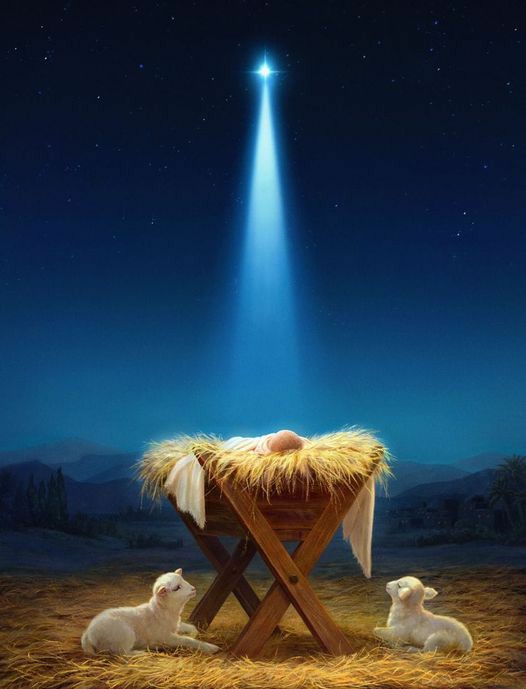
Image: “The Hope of Christmas” by Terry F.

The Greatest Gift Of All – Will You Accept It?

If you were brought up in a home where church was attended or even had friends or family who went to church regularly, I’m sure you’ve heard that “Jesus is the reason for the season.”

When I was a little girl, my grandmother wore a sweatshirt with the saying stitched boldly and in festive colors across the front. I still remember seeing her in the sweatshirt, and even though my mind knew the truth behind those words, my heart didn’t embrace it.

Like most people, the true meaning of Christmas became submerged beneath the transitory allure of the secular holiday, which, if we are honest, has little, if anything, to do with Bethlehem or a Savior named Jesus being born.

How ironic it is that a movie called “The Grinch Stole Christmas” has become almost a cultural phenomenon when the truth of the matter is that we, as humans, stole the meaning of Christmas long before any film about a Grinch was ever made.

In a way, those of us who celebrate Christmas as mostly a time of gift-wrapping and present-swapping, parties involving vast quantities of eggnog, hot cocoa, and cookies, along with Christmas songs and visits from an imaginary Santa have stolen Christmas. 

Now before you think I must have lost my mind in saying such a thing, let me explain what I mean.

In much the same way that the iconic Grinch tries to steal Christmas from the townspeople where he lives, we have tried to steal Christmas from Jesus. We’ve wrapped up the simple story of a baby born in a manger and left it under a tree, while giving our attention and adulation to secular stories where the key figures aren’t three wise men but instead elves, reindeer, and Mr.and Mrs. Claus. As for Bethlehem, it’s become the North Pole.

Once again, I feel I should explain something before I go further. I understand that there are those who believe Jesus was only a good man and not the Son of God. I’m not judging any of my readers who don’t believe as I do. However, even if we differ in terms of who we believe Jesus is, we surely agree that Christmas is a day that is named in his honor.

It’s perplexing to me that a baby of such humble beginnings is the person behind a time of year in which excess is seen in everything and where opulent attire and extravagant presents are often not only given but expected.

Yet, for every person or family for whom it’s the “most wonderful time of the year,” there is another person or family for whom the season is far from wonderful. As a society, it’s become politically correct to pay lip service to helping the homeless or donating to the “less fortunate,” but if the desire to do these things dwelled in our hearts, we wouldn’t need a special time of the year to remember them.

If we even pretend to attach any religious or spiritual significance to Christmas whatsoever, no one should have to inspire us to want to show love, compassion, and kindness to others. And when we fully comprehend that without the most important gift the world has ever known, Jesus, there would be no genuine hope for any of us, we realize that regardless of what we want, we have an obligation to honor that Gift by sharing it with those around us.

Heaven knows, I realize it can be awkward and downright embarrassing to talk about Jesus to a perfect stranger, but we are not called to live a life of comfort but rather a life of meaning in which God’s purpose for us prevails over our own desires and wishes. Santa and elves are cute and fun and they certainly can inspire whimsical decorations, but the greatest story of all the ages began with a nativity, not a sleigh. And there were no reindeer nor were there sumptuously decorated trees or fancy lights in that rustic stable oh so long ago in Bethlehem.

Jesus’s birth was an occasion of humility, and in coming to earth in order to be crucified for all the sins of mankind, the Son of God performed the ultimate act of selflessnes. His story and identity are things one can either accept or not, but no one can dispute He came from humble beginnings.

In our misguided efforts as mortals to equate an important event with fanfare and frivolity, we’ve replaced the manger with materialism and Christ with commercialism. An Ebenezer Scrooge isn’t needed for our narrative to take a tragic turn. Indeed, the only way that our story can become anything but tragic is for us to decide to do something drastic. And that drastic step is to put Christ back in Christmas.

Surely, since there would be no Christmas without a Christ, we should honor and remember Him before we pay homage to fanciful figures of pixies and white bearded men in fuzzy red suits.

But in our remembrance, we need to keep in mind that the gift God gave us through Jesus was not one that was forced upon us. It wasn’t like the present exchanges that are now such an integral part of Christmas. It was a gift that was given with no expectation of a return. God only asks that we accept the gift and, in return, the Light that came to brighten the entire world will illuminate our hearts, so that we can show and share the Love that is synonymous with Jesus not just once a year but the whole year through.

As Charles Spurgeon, the celebrated English”Prince of Pastors” once said, “The grandest Light in history is Jesus.”

Peace and Blessings,

Sascha πŸ•Š