Tag Archives: Hope

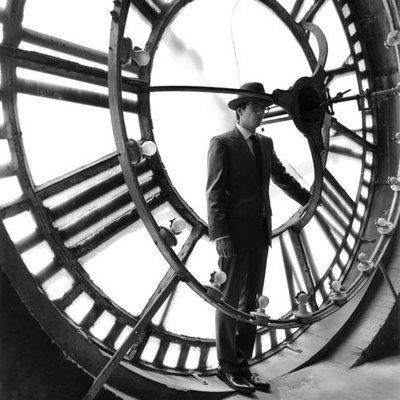
Will Time Say Nothing But I Told You So?

I wish that I could tell you not to mind about the little things. I wish I could say the word, once spoken, could be taken back. I would love to assure you that you will always have one more chance to get things “right.” Yet, I can’t.

I can tell you many things if my only objective is to nourish false hope. If one doesn’t care whether truth puts on the mask of falsehood or whether wishful thinking replaces reality, one will listen to the worldly feel-good recipes of comforting assurance that it is “never too late.”

And while it eases the existentialistic pain of day-to-day existence to imagine things are possible that really aren’t, I’m here to let you know that living in a dream-world keeps you from being prepared for the inevitable tragedies that come with time.

As W. H. Auden wrote in his hauntingly prophetic poem,  “Time will say nothing but I told you so.” For “it only knows the price we have to pay.”

The price is high – too high for mortals, for we wish to live in the land of Forever-Hopeful, where miracles that defy logic occur and where we convince ourselves that our lives will give us enough joy, love, peace, and happiness to outweigh all of the grief, cruelty,  pain and suffering.

I could attempt to give you answers for this, but many would not listen. And who am I to solve the riddles of humanity or to explain why things happen as they do? I have beliefs, and they provide me with a much needed blanket of solace when everything about life stops making sense (if indeed it ever did) and when my own world appears to be shattering. 

But who am I to think that what comforts me will comfort you? We are not here to be consoled. To be assured that things are better than they are only offers an escape from the reality of what is.

While believing, for example, in an all-knowing, loving and infinitely merciful Creator sounds good and while we may indeed find facts that back up such a belief, if we believe in such a Creator merely to bear the weight of our worldly burdens more easily, we set ourselves up for not merely disappointment, but, ultimately,  disillusionment. 

There are tragedies the like of which will remain forever mysteries to us as we walk this earth. We will lose the things and people we love most, if not tomorrow, then eventually. And there won’t be tidy explanations wrapped up in pretty paper like Christmas presents under a tree.

We will make mistakes that are irreversible and we will cause others and ourselves pain with little to no chance of reparation,  not even to ourselves.

And through it all, there will be – if we are lucky (or, perhaps, unlucky) – those who assure us that everything will be okay, that all is not lost, and that we can begin anew each day, with hopes of still making our dreams come true.

However well-intentioned such advice is, it is far better not to wait until it is truly too late to distance ourselves from the chloroform of counterfeit hope.

J. R. Tolkien once wrote, “False hope is more dangerous than fears.”

How much better it is to begin to weigh each word we speak, to think through the choices we make with greater perspicacity, to make more time for that which is of eternal importance rather than expending our energies on the ephemerally urgent.

Although there is nothing wrong with clinging to a vision of a life better, grander,  and more beautiful than the one you are living now and while having goals and dreams are an essential component of living with purpose, it is even more important to understand how fragile this life truly is and how quickly the things we take for granted now can be taken from us.

“Will time say nothing but I told you so?” Like Auden,  if I could tell you, I would let you know.

Sascha 🦉

This page and a written material at A Pilgrim’s Odyssey is written by Sascha Norris. (C) Copyright 2023-2024 by Sascha Norris. All Rights Reserved

(Images were lensed by the preeminent New-York based photographer Rodney Smith (1947-2016)

THE PROMISE OF ETERNAL LIFE: FAIRY TALE OR TRUTH?

The dogwood tree bloomed outside my bedroom window this past week and as I admired the beauty of organic nature, I also reflected on the finite nature of all earthly things that live. From people, animals and insects to trees, plants, and flowers, the common component of all these things is that they will all die.

Perhaps, this is one of the most easily understood reasons that the religion of Christianity appeals to someone. That promise of a life after this one – and an eternal one, at that – brings much needed hope to dark days in an increasingly broken and uncertain world.

If you are anything like me, you enjoyed reading fairy tales as a child. The heroic figures of fanciful stories, embellished with the often hyperbolic descriptions that enhance their appeal not only attract us as children but they also speak to the still childlike parts of ourselves when we reach adulthood. If being a sophisticated “adult” is important to us, we may deny our interest in fairytales. For our society is much more likely to encourage us to be “productive” citizens than visionary dreamers.

As C. S. Lewis, a fervent proponent of fairy tale reading once said, “One day you will be old enough to start reading fairy tales again.” Interestingly, he also spoke of reading fairy tapes in secret at the age of ten, declaring he would have felt shame had his predilection for them been discovered.

Yet, there’s no denying that Christianity has a fairy tale aspect to it, for when one starts incorporating miracles, babies born of virgins, and people being raised from the dead into stories one would certainly classify the genre as science fiction, fantasy, or a little bit of both.

It’s an ironic twist of how things often play out, that a day like Easter, a holiday that is supposed to celebrate Jesus’s Resurrection from the Dead, has become enveloped in a candy coated wrapping of pastel hued Easter eggs that are the main attraction of Easter egg hunts, oversized bunnies (people dressed up in rabbit costumes), and baskets brimming over with candy and other sugary treats. If we are too “sophisticated” for fairy tales, should we not also be too “sophisticated” for such childish celebrations?

Now before you imagine that I was never a child myself or that, if I was, I never enjoyed the so-called “childish” things, I remember being four or five years old and fetching all the hidden Easter eggs at an elementary school across from where my grandparents lived. With the naive excitement of a child, I imagined that since I had found the eggs, they were all mine. Of course, I didn’t end up keeping them, lest you wonder how the story turned out.

I realize many of the Easter celebrations I have mentioned are “for children,” but the trouble is, they aren’t giving anyone, including the children, an accurate idea of what Easter is intended to signify.

If one does even a fair amount of research, the fact that the “Christian” Easter originated in paganism is easily discovered. The eggs are connected with fertility and the name itself, “Easter,” is inspired by the pagan goddess of fertility, known as “Ostara” or “Eoster.” As for the rabbit, it also has origins in paganism. Bede, an early medieval monk who has often been regarded as the father of English history, once noted that in eighth century England, the month of April was called Eosturmonath after the goddess Eoster. He went on to write that a pagan festival of Spring in the name of this goddess had become incorporated into Christianity’s celebration of Christ’s Resurrection.

These worldly, or, to be more specific, pagan rituals have been incorporated into a holiday named by and celebrated by professing Christians, and if and when the pagan aspects of the day are embraced (as they will be), remaining mindful of the genuine hope found in Christ’s Resurrection is even more important.

In all truth, we don’t need the stardust and tinsel of made up fairy tales to give us hope. People dressed up as giant Easter bunnies and eggs dyed nearly every shade under the rainbow are temporal attractions, offering a joy that is both short lived and lacking in genuine fulfillment.

We can say what we like about Christianity being a fairy tale and can mock those who adhere to its teachings, but unless one has not ever believed in anything that wasn’t visible or that didn’t obey the “rules” of logic, discounting Christianity based simply on the fact it has supernatural elements isn’t a solid argument.

Although Sigmund Freud once called Christianity a “fairy tale ” and his followers replaced this with “folk tale,” those who open their minds enough to do some research know that Jesus was a real person and that the accounts of him in the New Testament were eyewitness accounts written before and after his death.

Easter, if one believes the research on its origins, is pagan and yet the same things being celebrated by pagans in this Springtime holiday- hope, life rebirth and renewal are also what Jesus offers those who follow Him.

So, eggs, Easter baskets, and bunny rabbit impersonators aside, we can all agree on the sentiments behind the holiday, even if those sentiments are evoked by different things. And, perhaps, those who have not yet gotten to know Jesus or taken the time to contemplate whether there is indeed truth in his identity as the Son of God as well as hope in the promise He offers of eternal life, will do so.

As C.S. Lewis said, “Christianity is both a myth and a fact. It’s unique. It’s the true myth.”

And just as goodness triumphs over wickedness in the fairy tales we love most, and just as redemption is offered to villians who seem beyond hope, so, too, Jesus offers us both redemption and promises us the ultimate triumph of good over evil, if not in this life, then in the next.

Peace & Blessings,

Sascha 🕊

March 31. 2024.

This page and all written material at A Pilgrim’s Odyssey is written by Sascha Norris. (C) Copyright 2023-2024 by Sascha Norris. All Rights Reserved.

(Images are: Cover Art- Easter Lamb of God and Cross by Sara Tee. Other images by artists John Pototschnik and Yongsung Kim)