Tag Archives: Cslewis

THE PROMISE OF ETERNAL LIFE: FAIRY TALE OR TRUTH?

The dogwood tree bloomed outside my bedroom window this past week and as I admired the beauty of organic nature, I also reflected on the finite nature of all earthly things that live. From people, animals and insects to trees, plants, and flowers, the common component of all these things is that they will all die.

Perhaps, this is one of the most easily understood reasons that the religion of Christianity appeals to someone. That promise of a life after this one – and an eternal one, at that – brings much needed hope to dark days in an increasingly broken and uncertain world.

If you are anything like me, you enjoyed reading fairy tales as a child. The heroic figures of fanciful stories, embellished with the often hyperbolic descriptions that enhance their appeal not only attract us as children but they also speak to the still childlike parts of ourselves when we reach adulthood. If being a sophisticated “adult” is important to us, we may deny our interest in fairytales. For our society is much more likely to encourage us to be “productive” citizens than visionary dreamers.

As C. S. Lewis, a fervent proponent of fairy tale reading once said, “One day you will be old enough to start reading fairy tales again.” Interestingly, he also spoke of reading fairy tapes in secret at the age of ten, declaring he would have felt shame had his predilection for them been discovered.

Yet, there’s no denying that Christianity has a fairy tale aspect to it, for when one starts incorporating miracles, babies born of virgins, and people being raised from the dead into stories one would certainly classify the genre as science fiction, fantasy, or a little bit of both.

It’s an ironic twist of how things often play out, that a day like Easter, a holiday that is supposed to celebrate Jesus’s Resurrection from the Dead, has become enveloped in a candy coated wrapping of pastel hued Easter eggs that are the main attraction of Easter egg hunts, oversized bunnies (people dressed up in rabbit costumes), and baskets brimming over with candy and other sugary treats. If we are too “sophisticated” for fairy tales, should we not also be too “sophisticated” for such childish celebrations?

Now before you imagine that I was never a child myself or that, if I was, I never enjoyed the so-called “childish” things, I remember being four or five years old and fetching all the hidden Easter eggs at an elementary school across from where my grandparents lived. With the naive excitement of a child, I imagined that since I had found the eggs, they were all mine. Of course, I didn’t end up keeping them, lest you wonder how the story turned out.

I realize many of the Easter celebrations I have mentioned are “for children,” but the trouble is, they aren’t giving anyone, including the children, an accurate idea of what Easter is intended to signify.

If one does even a fair amount of research, the fact that the “Christian” Easter originated in paganism is easily discovered. The eggs are connected with fertility and the name itself, “Easter,” is inspired by the pagan goddess of fertility, known as “Ostara” or “Eoster.” As for the rabbit, it also has origins in paganism. Bede, an early medieval monk who has often been regarded as the father of English history, once noted that in eighth century England, the month of April was called Eosturmonath after the goddess Eoster. He went on to write that a pagan festival of Spring in the name of this goddess had become incorporated into Christianity’s celebration of Christ’s Resurrection.

These worldly, or, to be more specific, pagan rituals have been incorporated into a holiday named by and celebrated by professing Christians, and if and when the pagan aspects of the day are embraced (as they will be), remaining mindful of the genuine hope found in Christ’s Resurrection is even more important.

In all truth, we don’t need the stardust and tinsel of made up fairy tales to give us hope. People dressed up as giant Easter bunnies and eggs dyed nearly every shade under the rainbow are temporal attractions, offering a joy that is both short lived and lacking in genuine fulfillment.

We can say what we like about Christianity being a fairy tale and can mock those who adhere to its teachings, but unless one has not ever believed in anything that wasn’t visible or that didn’t obey the “rules” of logic, discounting Christianity based simply on the fact it has supernatural elements isn’t a solid argument.

Although Sigmund Freud once called Christianity a “fairy tale ” and his followers replaced this with “folk tale,” those who open their minds enough to do some research know that Jesus was a real person and that the accounts of him in the New Testament were eyewitness accounts written before and after his death.

Easter, if one believes the research on its origins, is pagan and yet the same things being celebrated by pagans in this Springtime holiday- hope, life rebirth and renewal are also what Jesus offers those who follow Him.

So, eggs, Easter baskets, and bunny rabbit impersonators aside, we can all agree on the sentiments behind the holiday, even if those sentiments are evoked by different things. And, perhaps, those who have not yet gotten to know Jesus or taken the time to contemplate whether there is indeed truth in his identity as the Son of God as well as hope in the promise He offers of eternal life, will do so.

As C.S. Lewis said, “Christianity is both a myth and a fact. It’s unique. It’s the true myth.”

And just as goodness triumphs over wickedness in the fairy tales we love most, and just as redemption is offered to villians who seem beyond hope, so, too, Jesus offers us both redemption and promises us the ultimate triumph of good over evil, if not in this life, then in the next.

Peace & Blessings,

Sascha 🕊

March 31. 2024.

This page and all written material at A Pilgrim’s Odyssey is written by Sascha Norris. (C) Copyright 2023-2024 by Sascha Norris. All Rights Reserved.

(Images are: Cover Art- Easter Lamb of God and Cross by Sara Tee. Other images by artists John Pototschnik and Yongsung Kim)

The Love That Never Fails

We are all designed with a need to both give and receive love. This need is intertwined into the innermost part of our being. You might say that it is part of our DNA. Try as we might to convince ourselves that we don’t require love in our lives to be content or happy, the truth is that the need to be loved is part of being human. And the need to show love to others is present in all but the most narcissistic of mortals. .

The difficulty in both of these needs is that no earthly love can or will ever fulfill us. For the inadequacy that is within a mortal’s ability to love is bound up in his or her very essence.

We are created beings, formed by an all-knowing Creator whose nature is the epitome of love, regardless of how it might appear otherwise from the broken world we all live in. And our Creator’s perfect love is far beyond the scope of human comprehension. In fact, that which we humans call “love” is most likely so far removed from His love for us, that one might wonder if it even resembles it.

For humans, love, no matter what we say or even think of it as, is all too often a series of deposits and withdrawals, a pattern of giving and taking, ,in which careful mental notes are kept of who did what, gave what, and said what. Egos are bruised, feelings hurt, and hearts broken, all in the name of what we call “love.”

If God’s love for humanity were akin to our “love” for our fellow mortals, we would already have been wiped off the face of the earth. Love was never intended to be a transaction or a power play of sorts. And the fact that it so often is makes it not the least bit surprising that millions of people around the world are living bereft of genuine love.

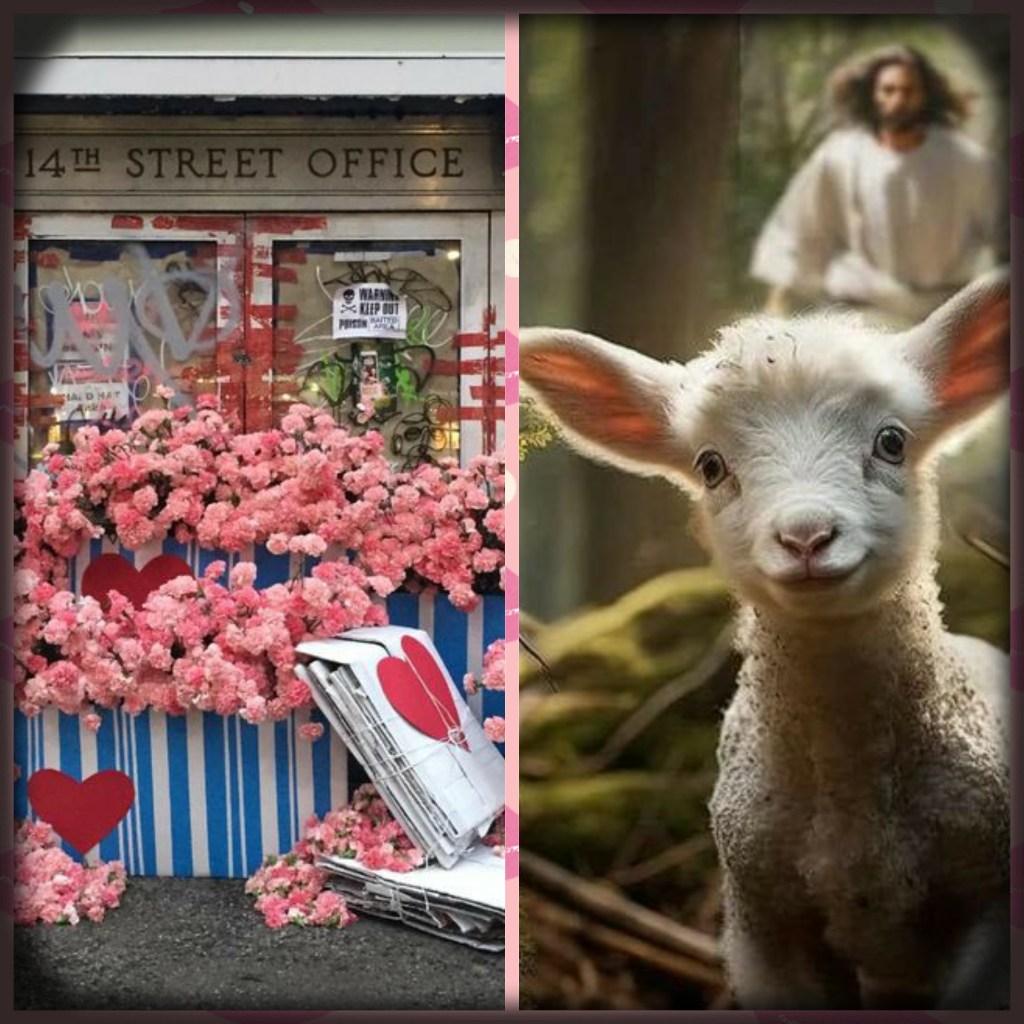
Every Valentine’s Day, the stores cater to the romantic ideal, overloading our conscious and subconscious minds with the false idea that boxes of chocolates, flowers, and similar gifts are a reflection of or a substitute for love. None of these things are lasting comfort to the soul aching for true love and acceptance, the soul seeking a mutual connection with someone who understands them, or, at least, makes the effort to.

I hope my readers will not imagine that I see myself as any sort of expert on the subject of love, for all I really know is what it should be. I haven’t the faintest idea of how to perfectly love anyone, and I don’t think any mortal does. Oh, some of us imagine ourselves to be experts on the subject, but the world we live in shows what a poor comprehension we, as a society, have of love. None of us are experts – we’re just people who think we know a lot about things that we have very little, if any, knowledge about. Mostly, what we have are “answers” for questions that we never even understood to begin with.

French anthropologist and ethnologist Claude Levi-Strauss once said, “The wise man doesn’t give the right answers, he poses the right questions.” The problem with most of us is that we don’t know what the right questions are, yet we demand answers anyway.

And while this sort of behavior might work reasonably well in something like math or science, since not having the right questions would eventually become obvious, in the realm of love, things aren’t so clear-cut. For we humans aren’t able to be defined on pieces of paper or reduced to algorithms.

We were created as multi-faceted beings with emotional needs so subject to change and circumstantial variables that they might well be compared to the weather that alters with the times and seasons.

In this respect, we are very much unlike God even though we are made in His image, for Hebrews 13:8 tells us that He ” is the same yesterday today and forever.”

As mortals with emotional baggage from past hurts and sorrows, we express love through the lens of this trauma, no matter how diligently we may have tried to eradicate the damage in order to achieve so-called emotional “health.”

No matter how much we want to be capable of purely loving another living creature, we will always be on the cusp of this achievement, knowing what we want yet also feeling it is right beyond our grasp, much as one might feel seeing a rare jewel behind a jewelry store’s glass case.

And, most of the time, we actually are far removed from loving anyone. We are, after all, the creatures who engage in such nonsense as “tough love,” where hurtful words and actions are spoken and performed while simultaneously paying lip service to wanting “the best” for the other person. Moreover, many instances of horrendous abuse of all kinds is done under love’s name.

Love seems to be something mortals latch onto as a justification for all kinds of vile behavior, leaving many of us wondering what love even is or what it is supposed to be.

C.S. Lewis, a writer whose knowledge on the subject of love is undoubtedly far more comprehensive in scope than mine, made a pertinent point in his book, “The Four Loves,” when he said that many of those who say that God is love mistakenly reverse the sentence and say love is God.

By making love and God one and the same, a person attributes behavior that is utterly unloving to both love and God which is not only wrong but blasphemous.

The Bible gives clear indicators of God’s character and although He is love, actions done under the name of love that go against God’s character are not actually loving, regardless of how they may be perceived to those engaging in them.

Much of the suffering we endure is caused by erroneous beliefs about love and misguided attempts to find it where it does not exist or exists in a toxic or twisted form. We can say all we want to about self-love being the most important thing and we can convince ourselves of our own self-sufficiency until we are nearly blue in the face, but we will never stop searching for love in some form or fashion. For some, it may be in the form of friendship rather than romance and for others it could be adopting a pet. Whatever the case may be, our spiritual selves crave love as our bodies need oxygen.

Sophocles once wrote, “One word frees us of all the weight and pain of life; That word is love.”

Yet, we don’t need a Greek tragedian to reiterate what is being expressed within our beings every day. To deny the need to love and be loved is to deny our humanity. And, those who believe they are the exception are doing themselves more harm than good because they are attempting to go against nature, something that even the Stoics cautioned against.

However, in spite of how deeply, sincerely or unconditionally any of us try to love another and regardless of how intent we may be on finding this love for ourselves, we will always be ultimately disappointed. Even if a love is “forever,” we are mortals and this means the people we love die. Or we die and leave loved ones behind.

Much as we want it to be otherwise and much as society tries to get us to believe something else, there is no mortal, earthly love that will not eventually end in some way. We will be abandoned or we will abandon someone else.

The good news is that there is a love that never fails and that we can rely on, no matter what. And the wonderful part of it is that this love is far better than all the others combined because it is a love that loves us exactly as we are. If you think this sounds too good to be true, you are certainly on to something there. It is more than we deserve and yet it is ours the second we accept it. It is God’s Love, a love more pure, more loyal, more all-encompassing than anything we can find within this world.

God’s Love is the Love that will never fail, the love that doesn’t punish, doesn’t abuse, never holds grudges and never tries to make us into something other than we are just so we will be “lovable.” Yes, God does seek to mold us and change us if we allow Him to do so. Yet His Love is never contingent on us conforming to a preconceived image or idea.

God gifts us with verses in I Corinthians that describe what His love is perfectly.

“Love is patient, love is kind. It does not envy, it does not boast, it is not proud. It does not dishonor others, it is not self-seeking, it is not easily angered, it keeps no record of wrongs. Love does not delight in evil but rejoices with the truth. It always protects, always trusts, always hopes, always perseveres. Love never fails.”

Although none of us can hope to embody this love completely this side of heaven, these verses serve as a constant reminder of what Love was intended to be and the Love we will always find in God – the perfect Love that never fails.

Peace & Blessings,

Sascha 🦉

This page and all written material at A Pilgrim’s Odyssey is written by Sascha Norris. (C) Copyright 2023-2024 by Sascha Norris. All Rights Reserved.